
Car thefts in Germany increased again in 2023, but electric cars remain the exception for most perpetrators: The Federal Criminal Police Office (BKA) recorded 15,924 permanently stolen passenger cars in its “Federal Situation Report on Motor Vehicle Crime 2023,” nine percent more than in the previous year. Organized groups often transport many vehicles abroad on the same night, making time pressure a key risk factor. High-priced vehicles frequently disappear to order. With electric cars, it seems that even the clients who commissioned the thefts are often lacking. As a result, the losses are primarily concentrated on combustion engine vehicles. (ecomento: 02.03.36)
Why Rapid Departure Favors Combustion Engine Vehicles
Investigators describe how gangs predominantly use vehicles with combustion engines because they can cover long distances without planning. Henning Hauswald, head of the “Special Commission for Motor Vehicle Crime” at the Saxony State Criminal Police Office (LKA), stated: “Thieves don’t have time to stop at a charging station.” This is a practical argument, as every additional stop increases the likelihood of detection.
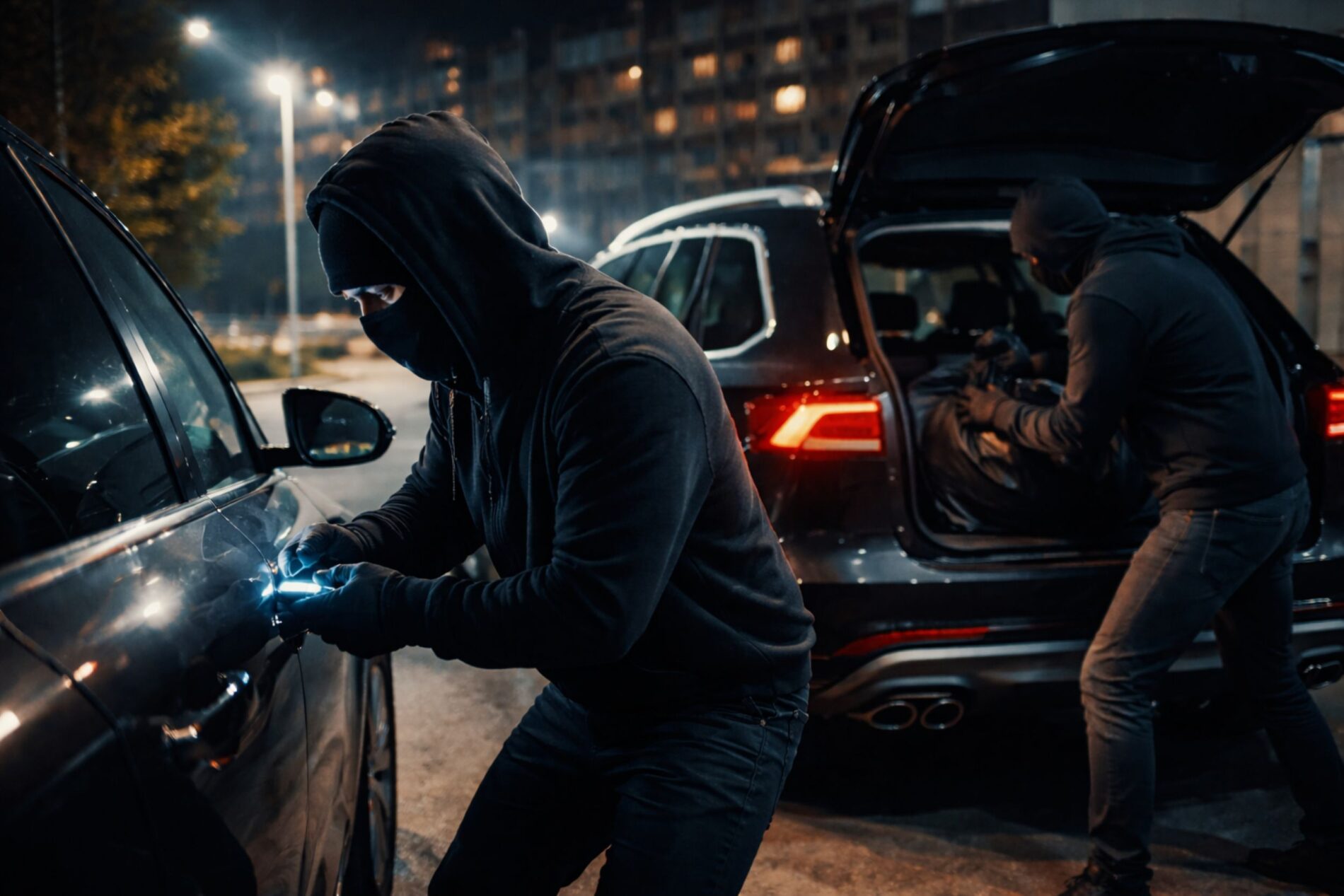
Many criminal groups move stolen cars across borders very quickly, while the owners often don’t notice the theft until much later. This is precisely why the first night is crucial; any delay is perceived as a security risk by the perpetrators. An electric car potentially necessitates charging stops, but this doesn’t align well with escape routes designed for speed. Therefore, combustion engine vehicles remain the preferred choice for this business model.
Eastern Europe and Sales Markets – Demand Plays a Decisive Role in Car Thefts
Eastern Europe continues to play a significant role as a destination and transit region. Furthermore, according to the German Federal Criminal Police Office (BKA), the United Arab Emirates is considered an important sales market for high-quality vehicles and parts. Charging infrastructure is less dense in several Eastern European countries, and demand for electric cars is also lower there. This reduces predictability for gangs, as they not only have to transport an electric car but also sell it.
Added to this is the distance: There are often several hundred kilometers between the crime scene and the border. If a vehicle is stolen in Hesse or Lower Saxony, for example, an empty battery before reaching the border can become a real problem. Perpetrators avoid this risk, while they can refuel gasoline and diesel vehicles flexibly.
High-priced cars as “contract theft” – the customer side is missing for electric cars
With expensive models, theft often proceeds like a procurement order, i.e., “made to order.” Regional investigation reports describe precisely this pattern in organized crime sprees where specific models are targeted. This explains why particularly high-priced combustion engine vehicles remain attractive: They are easier to resell or dismantle abroad, and there are also established buyer networks.
With electric cars, the demand side appears weaker in car thefts. In typical target regions, the market is lacking, and charging dependency and infrastructure also act as deterrents. If there are no clients, the effort is less worthwhile for perpetrators, while combustion engine vehicles continue to be considered safe “goods.” Therefore, electric cars are slipping down the list in the perpetrators’ logic, even though their numbers are increasing.
Technology as a counterargument: Tracking and digital traces
Electric cars often incorporate more advanced technology that perpetrators must factor in. They frequently have tracking systems and connectivity, allowing investigators to locate them more quickly if necessary. Furthermore, charging at public stations leaves traces, making theft more risky. This increases the pressure on perpetrators, while older combustion engine vehicles without modern systems often become more easily “invisible” in practice.