
In the UK, internal government documents reveal significant environmental consequences resulting from the accelerated expansion of wind turbines and solar farms under Energy Minister Ed Miliband. The dossier came to light through requests filed under the Freedom of Information Act. It identifies risks to protected areas, landscapes, historic sites, biodiversity, and water resources. Furthermore, there is a threat of increased air emissions, greenhouse gases, noise, vibrations, light pollution, dust, and soil damage. Of particular sensitivity is the potential encroachment upon Green Belt land and agricultural acreage. Consequently, farmers, local residents, and the issue of British food security have moved to the center of the debate. (dailymail: 17.05.26)
Environmental Impacts Threaten Protected Areas, Water, and Biodiversity
The documents identify the interventions with unusual clarity. The plans could destroy “nationally recognized protected areas, landscapes, and historic environments.” Furthermore, they could harm “biodiversity and water resources.” Consequently, the conflict extends far beyond individual construction sites.
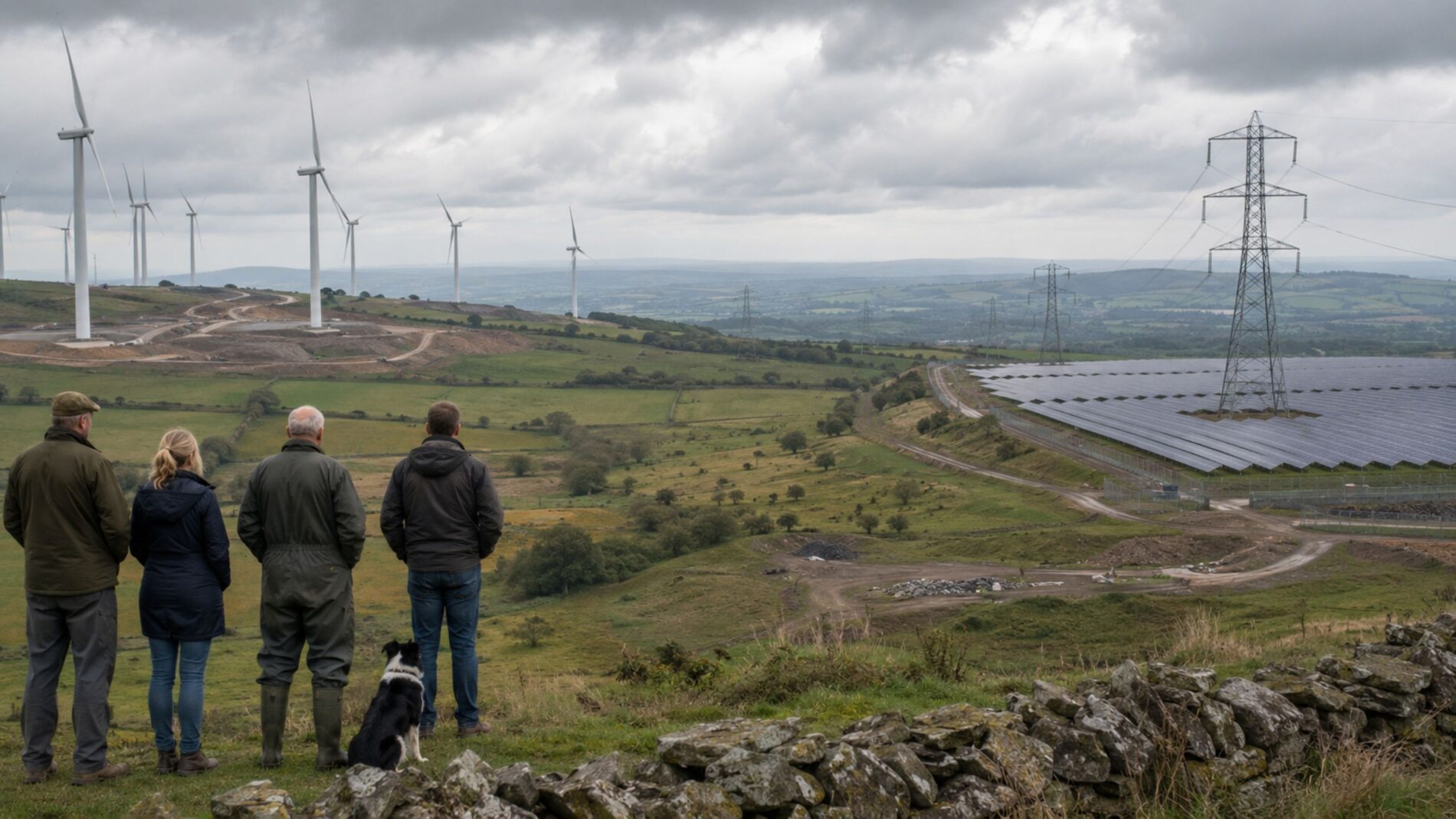
However, officials cite additional adverse impacts. These include further “air emissions, greenhouse gas emissions, noise and vibrations, light pollution, dust, and soil impacts.” According to the dossier, these effects may occur repeatedly. They can have short-term, medium-term, and long-term consequences. Consequently, the construction phase also heightens the risks for affected communities.
Green Belts and Agriculture Come Under Pressure
The reference to the Green Belt is particularly sensitive. According to the documents, the proposed changes are intended to lift certain restrictions currently applying to Green Belt areas. “This could include agricultural land,” the dossier states. As a result, the dispute directly impacts British food production.
For farmers, this development comes at a time of already heightened tension. Many farming businesses are already critical of the Labour government’s plans regarding inheritance tax. Now, the threat of additional land-use conflicts—stemming from solar farms, electricity pylons, and grid infrastructure—looms large. Furthermore, the loss of agricultural land could undermine food security.
Miliband Pushes Ahead with Large-Scale Projects Despite Local Opposition
Ed Miliband continues to drive forward the expansion of large-scale solar farms. Last month, the MP for Doncaster North celebrated the launch of his 25th major green energy project. However, ministers anticipate strong resistance, given that another 157 solar farms are slated for construction by 2030. For local residents, this often entails permanent encroachments upon their immediate surroundings.
Miliband is also exercising extensive planning powers. These powers permit interventions—even in the face of local objections—once a project is designated as being of national significance. Consequently, local communities lose influence over developments taking place in their vicinity. While the government emphasizes energy security and climate targets, the environmental repercussions are exacerbating the conflict in rural regions.
Opposition Criticizes Concrete, Pylons, and Industrial Facilities
Conservative energy politician Claire Coutinho launches a sharp attack on Miliband. She stated: “Ed Miliband cannot continue to preach about environmental protection while carpeting Britain’s landscape with concrete, electricity pylons, and industrial infrastructure.” With this, she targets the inherent contradiction between climate policy and land use.
Coutinho added: “Time and again, he has prioritized Net Zero dogma over common sense—and the public can now see the consequences.” This criticism strikes at the very heart of the documents in question. The expansion of renewable energy is intended to reduce emissions; however, its environmental impact can place a significant strain on nature, soil, water, and landscapes. For local residents and farmers, the specific location of each project now determines the level of public acceptance, as well as the associated costs and risks.