
In Bretten, near Karlsruhe, the Bosch subsidiary BSH (Bosch-Siemens Home Appliances) plans to close its oven and range hood factory by March 2028 at the latest. The site was modernized as recently as 2025 and is considered a model factory. A new enameling line is even regarded as a showcase technical project. The closure plans were announced in October, coming as a complete surprise to around 1,000 employees, the town, and employee representatives. The company cites weak markets, overcapacity in its European production network, and high labor costs in Bretten as reasons for the closure. However, the works council and town hall point to ongoing investments, profitability, and the plant’s significant importance. The fact that a system recently presented as energy-efficient is slated for closure after only a few years is particularly concerning. For Bretten, the issue is about much more than just a factory. Suppliers, tradespeople, and a long-established community closely associated with the Neff brand since the 19th century are also affected. (faz: 23.03.26)
Bretten: Between High-Tech Expansion and Plant Closure
In the plant, pressed steel sheets hang on conveyor belts, are powder-coated, and then enameled in an 835-degree Celsius furnace. This furnace, in particular, is considered technologically advanced, but it is only slated to operate until the planned closure. For the works council, the new facility is therefore symbolic of a decision they cannot understand from either an economic or organizational perspective.
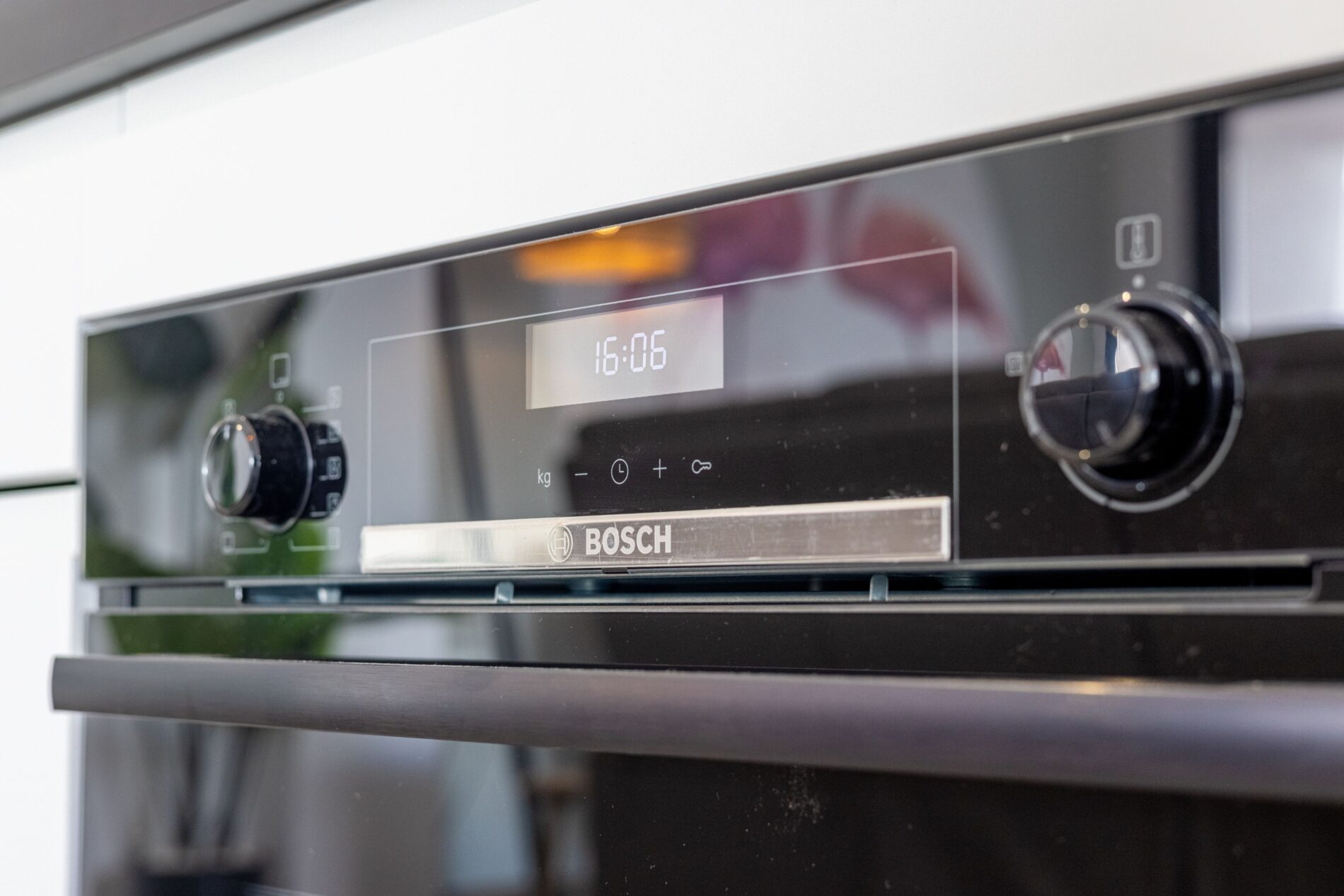
In addition, there are further investments that, from the employees’ perspective, don’t align with the closure of the site. BSH modernized oven assembly, installed a new automated line for range hoods, and is also renovating the training center on the premises. Works council chairman Kristian Kipcic-Suta says: “For us, this is all a catastrophe and completely incomprehensible. We don’t understand why they’ve invested for years, even expanding and modernizing the plant, and now want to close everything down.”
Shock among the workforce and anger at City Hall
The break with previous commitments is particularly devastating. At the beginning of 2024, BSH announced worldwide job cuts but simultaneously stated its intention to maintain its six German production sites. Therefore, the news came as a complete surprise to many employees, while, according to the works council, the workforce has still not accepted the decision. Thomas Rudolph describes the moment of the announcement as follows: “My colleagues stood there with blank stares. It was a state of shock; they needed the weekend to realize what had happened.”
The situation is particularly sensitive for the city because Bretten has actively supported the plant. In 2022, the municipality built a parking garage for €8.5 million so that BSH could use space on the factory premises for production, administration, and logistics. Mayor Nico Morast also criticizes the fact that management has yet to provide a comprehensible explanation and is blocking discussions about alternatives. He estimates that not only 1,000 jobs at the plant, but up to 3,000 more jobs in the region are at risk.
A Profitable Site with No Future Guarantee
For BSH, this site isn’t just any factory, but the historical heart of the Neff brand. In 1877, Carl Andreas Neff founded a factory there for coal-fired ovens, which later became a major manufacturer of electric cookers. After several changes of ownership and a rescue during the AEG crisis, the plant was acquired by BSH. It’s all the more devastating for Bretten that production is slated to end just after the plant’s 150th anniversary in 2027.
The economic dispute remains heated. Industry experts estimate an operating profit of around €23 million for the plant in 2025, with sales of €250 to €300 million, while the works council maintains it is an economically stable location. BSH counters that the site has the lowest capacity utilization and, at the same time, the highest labor costs within its European oven manufacturing network. The company defends the closure as a strategic measure to safeguard the overall competitiveness of the corporation, while Bosch, as the parent company, explicitly supports the move. Locally, however, this sounds like blatant disregard for a profitable and identity-forming work.