
Bielefeld has decommissioned seven hydrogen-powered garbage trucks because the hydrogen refueling station they previously used in Rheda-Wiedenbrück has closed. Each refueling trip previously required a round trip of approximately 80 kilometers. With the station’s closure, the only alternative is a significantly longer refueling journey, disrupting regular operations. The fleet cost around 7 million euros, or about 1 million euros per vehicle, and was considered heavily subsidized by federal funds. Bielefeld put its first hydrogen-powered garbage truck into service in 2021. The six other vehicles were added much later and only entered service about two years ago. (electrive: 09.02.26)
Fuel station closed; range no longer sufficient for daily operations
The vehicles previously refueled in Rheda-Wiedenbrück. Each refueling trip involved approximately 80 kilometers round trip. This put a strain on operations because, according to reports, the garbage trucks’ range was around 300 kilometers. This meant a significant portion of the daily service was lost just getting to the fuel pump.
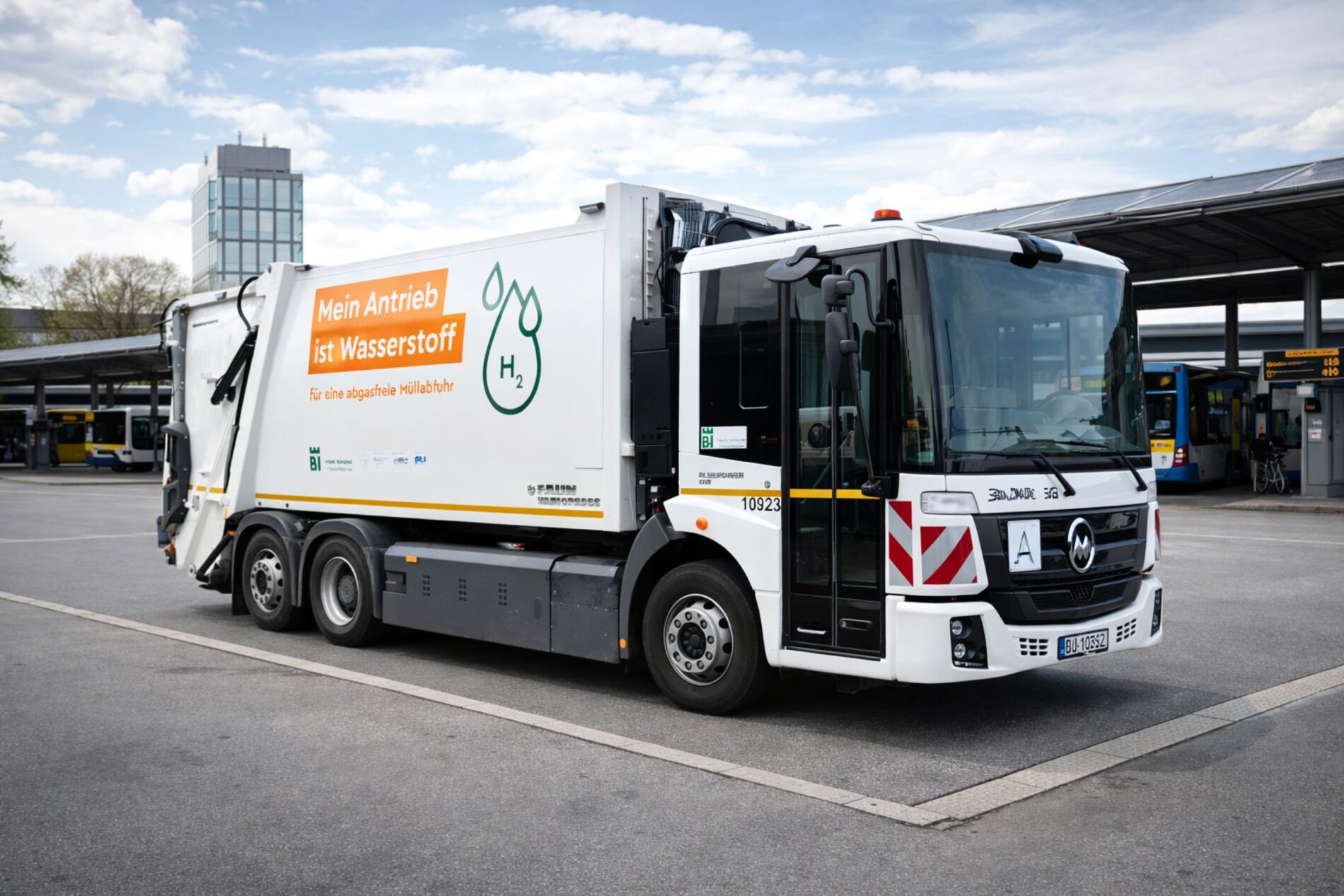
Since the closure of this station, Münster remains the only alternative. According to the data, the nearest option there is approximately 90 kilometers away each way. This equates to roughly 180 kilometers round trip just for refueling the vehicles. This solution is therefore considered “no longer viable” because the remaining range is insufficient for route planning.
High additional costs, high subsidy: The funding in figures
The scale of the subsidy can be seen in the additional costs compared to a conventional garbage truck. The hydrogen-powered garbage truck was budgeted at €1,000,000. A conventional garbage truck was estimated at around €250,000. This results in additional costs of approximately €750,000 per vehicle.
This difference was precisely the basis for the funding. The federal government covered 90 percent of the additional costs, i.e., a subsidy of €675,000 per vehicle. Despite the substantial funding, which amounts to almost €5 million for the seven vehicles, the fleet remains idle due to the lack of refueling.
Hydrogen filling station in the city, but funding regulations block its use
The fatal flaw in this situation is that a hydrogen filling station exists in Bielefeld. It also received government funding, but due to the funding agreement, its use is contractually restricted to H2 buses. Garbage trucks are not allowed to refuel there, even though they are part of the municipal fleet. Thus, a formal funding regulation prevents an obvious solution.