
A Düsseldorf-based company plans to restart decommissioned German nuclear power plants. Avenes Europe GmbH presents reactivation as its central project goal. This brings back to the forefront an issue that Germany had essentially resolved with the last shutdown date. The last three nuclear power plants were taken offline on April 15, 2023. (ruhrbarone: 12.02.26)
The project – up to eight reactors, increased baseload power in the short term
The industry association KernD describes the “AVENES Europe project” as focusing on reactivation and a second technology pathway. KernD explicitly mentions the “reactivation of up to eight nuclear power plants in Germany.” This is intended to provide “CO₂-neutral and grid-stabilizing electricity in the short term.”
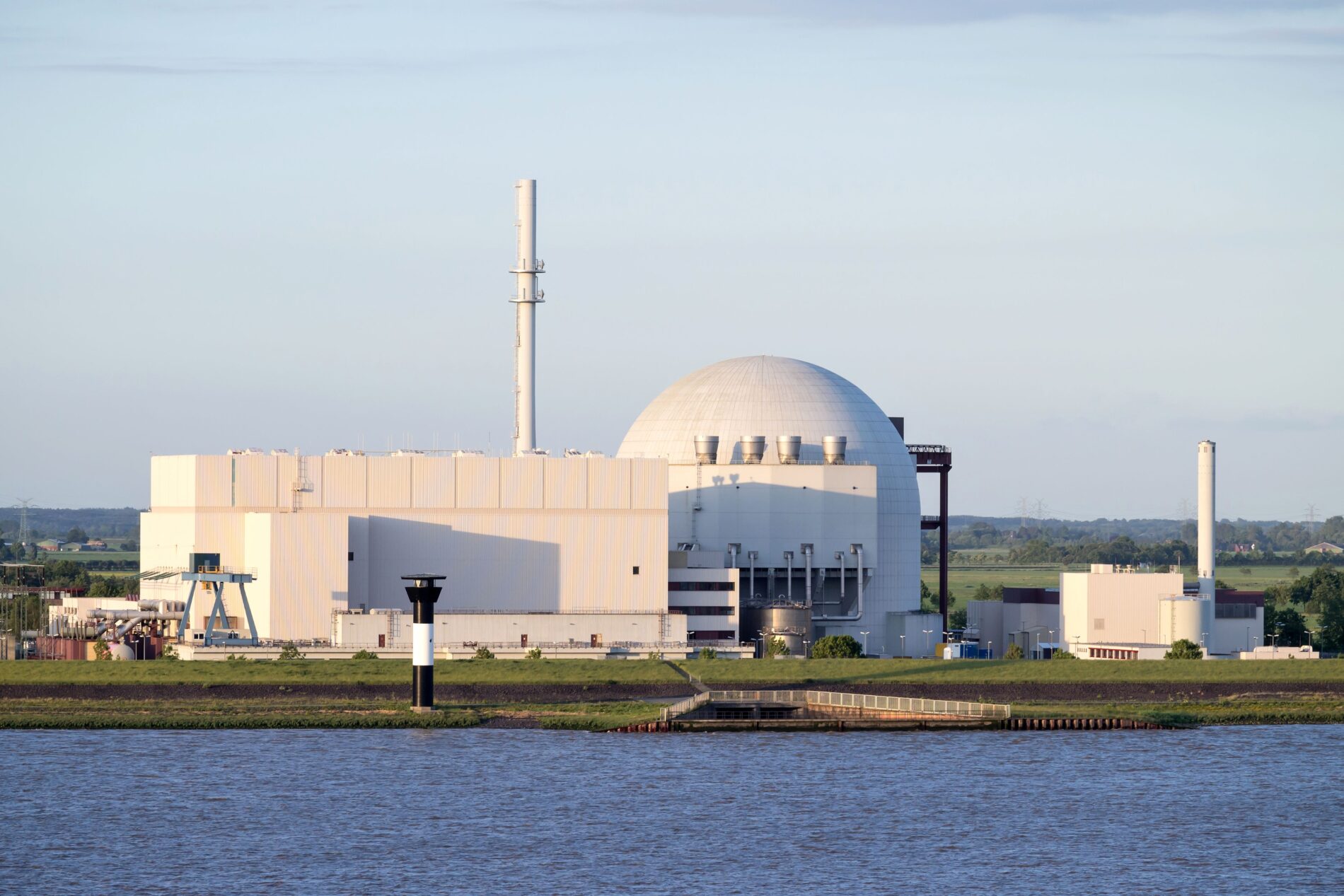
In its report, Avenes also names specific plants. According to the report, Brokdorf, Grohnde, and Isar II are to resume generating electricity. At the same time, CEO Thomas Jobsky speaks of the industrial policy benefits and of discussions with investors. He also points to support from the industry, for example from Framatome and Westinghouse.
Business Model – Public-Private Partnership and Risk Restructuring
Avenes is not counting on the former owners returning to the previous model. Instead, Jobsky intends to transfer the plants “into a new operating structure in the form of a public-private partnership (PPP),” with the federal government and private shareholders. This is intended to create a new model that reorganizes operations, investments, and liability.
The model also addresses balance sheet and decommissioning issues. Jobsky states: “This is a significant advantage for the shareholders of RWE, E.ON, Vattenfall, and EnBW. With decommissioning periods of over 20 years and the associated long-term financial risks, this will relieve the burden on the energy companies’ balance sheets.” According to Jobsky, the energy providers could later rejoin the company as shareholders if interested.
CO₂ Comparison – Germany Far Ahead of France in 2025
Avenes links the reactivation debate to climate figures, and here, a look at annual averages is worthwhile. Agora Energiewende reports an average CO₂ intensity for electricity generation in Germany of 310 g CO₂eq/kWh in 2025. This means the German figure remains high, even though wind and solar power are increasing significantly.
France is considerably lower because its power plant portfolio is structured differently. The French transmission system operator RTE reports an average CO₂ intensity for electricity generation of 21.7 g CO₂eq/kWh for 2024. While Germany thus remains in the triple digits, France operates in the low double digits.
Dismantling Hurdle – Operators Resist
On paper, reactivation sounds simple, but dismantling imposes limitations. PreussenElektra explains that dismantling of Isar II is underway and the plant is “technically no longer reactivated.” RWE points to the legally mandated dismantling, and Vattenfall rules out restarting decommissioned plants. Nevertheless, Jobsky is sticking to his approach and focusing on a new structure instead of the old operator roles.
Ultimately, politics decides on the parameters, and investors demand reliability. This is precisely where the bottleneck lies, because Germany has repeatedly changed course on the nuclear issue. Avenes is now trying to define reactivation as a business model, not just a public debate. This transforms the intention into a concrete requirement that must be measured against permits, dismantling progress, and available capital.