
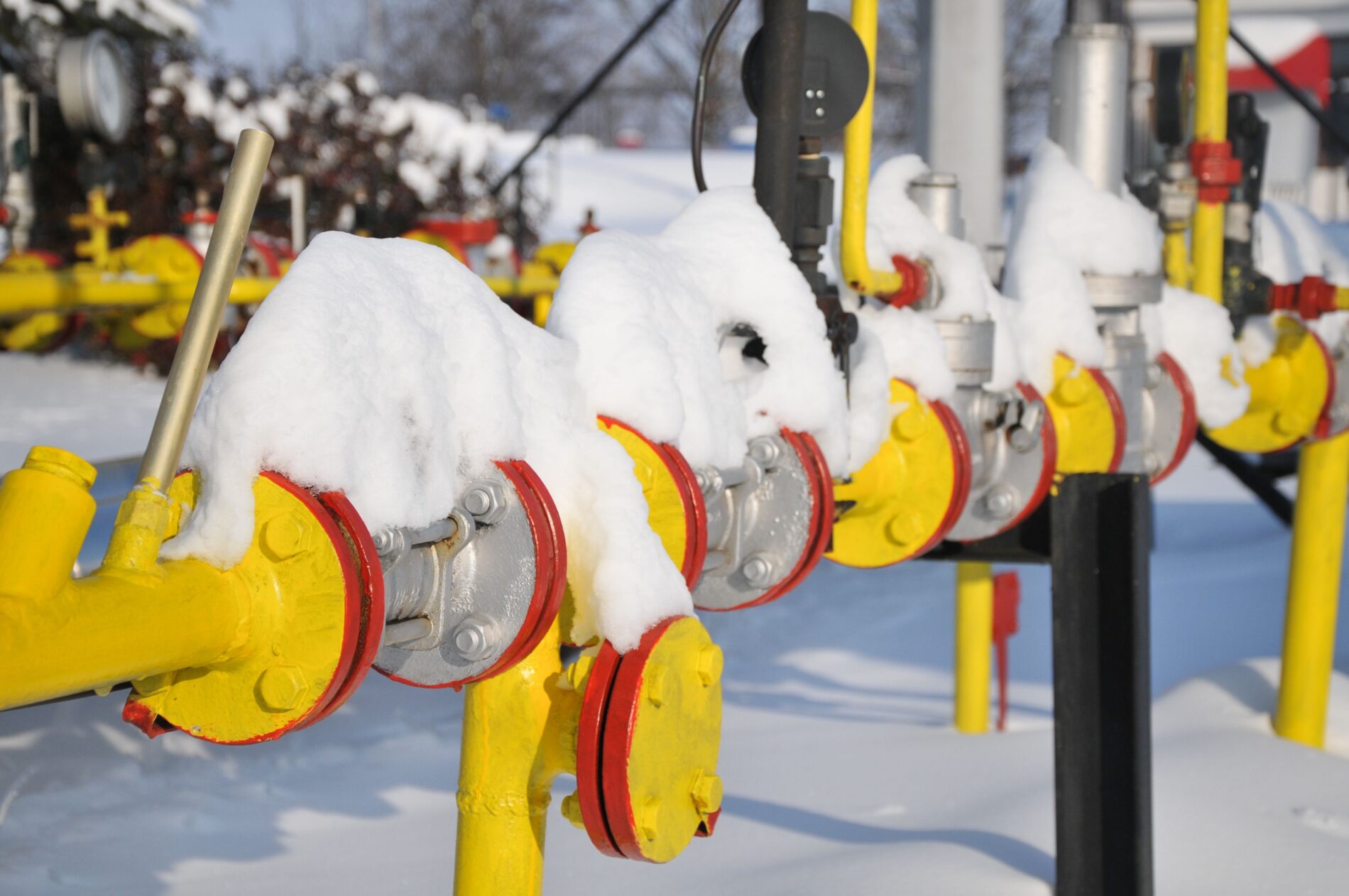
The arctic cold is already noticeably impacting US gas production. The Permian Basin in Texas and New Mexico is particularly affected, as temperatures there are dropping well below freezing. In the early morning hours, valves, measuring points, and manifolds are especially quickly pushed to their limits by the frost. (bloomberg: 24.01.26)
Production freezes due to Arctic cold – the extent has already been quantified
Wood Mackenzie provides the key reference figure. The company is considered a leading energy data provider and consultant, whose estimates are used as a benchmark by many traders, producers, and investors. According to Wood Mackenzie, current freeze-offs amount to approximately 3 billion cubic feet per day (BCf/d), resulting in a significant supply shortfall for the market.
Analysts expect the Arctic cold to intensify further by the end of January. Potential outages range from 8.5 to 20.4 billion yards per day (bcf/d), depending on temperature trends and the duration of the frost. This range illustrates the severity of the weather and explains the nervousness in the markets.
Why plants “shut down” – Hydrates instead of simple pipe frost
Freeze-offs are not caused solely by cold air, but also by processes within the gas flow. When gas flows from high well pressure into lower-pressure pipelines, it cools rapidly. If the gas contains moisture, methane hydrates form—ice-like crystals that clog valves from the inside.
US shale gas is often “wet” at the wellhead, meaning it is highly liquid, and therefore the infrastructure is more sensitive. Operators then deliberately reduce flow to prevent damage to valves. This causes production to drop abruptly, even though the wells are physically present.
Real-time market reaction: Henry Hub surges, Europe pays the price
Prices are reacting faster than any delivery because traders immediately factor in supply risks. On the US trading platform Henry Hub, natural gas rose to over $6 per MMBtu, the highest level since the end of 2022. Furthermore, US futures surged within a few days because the weather risk is considered real and not merely a theoretical exercise.
For Germany, the transmission mechanism is crucial, as Europe has been buying a significant amount of LNG from the US since Russian pipeline volumes ceased. If US prices rise and production falls, the risk premium on imported natural gas increases. Therefore, procurement becomes more expensive even if the physical shortfall only becomes apparent later.
LNG supply chain under stress: Less feed gas, later ships
The export logic hinges on so-called feed gas, i.e., the flow to the liquefaction plants. If production in basins like the Permian Basin fails, these flows decrease, and terminals become less stable. At the same time, loading windows are coming under pressure because individual cargoes are being rescheduled or reduced in size.
The timescale exacerbates the situation, as the transatlantic crossing takes approximately two weeks. A disruption today would therefore have a delayed impact in Europe, and this could coincide unfavorably with a late cold snap in Germany. This would then lead to higher demand meeting less flexible supply, further driving up the price of natural gas.
Europe’s Storage and Exchanges: Physics Meets Premiums
Europe is starting from a weaker position because storage levels are significantly below normal. According to AGSI/GIE, EU storage facilities are only about 46 percent full, while the five-year average is 61 percent. If the fill level continues to fall, storage pressure will decrease, and the potential withdrawal rate will also decline.
On the leading European exchange, TTF, natural gas recently rose to over €40 per MWh, exacerbating cost pressures in Germany. Europe is also paying a premium to Asia to divert LNG tankers. This not only makes natural gas appear scarcer but also more expensive.
Speculative Amplifiers and Geopolitical Undertones
Price dynamics are further driven by positioning, as many market participants rapidly reallocate their holdings. ING recently reported large short positions of around 77,014 contracts, which will need to be covered if prices rise. Such buybacks increase upward pressure and make price swings steeper.
At the same time, the environment remains tense because geopolitical risks often drive energy prices across the board, affecting both gas and oil. While the US price spike may be short-lived if production stabilizes and storage capacity helps, Europe’s risk remains high because the “virtual pipeline” across the Atlantic quickly reaches its limits in freezing temperatures.