
Aldi Süd is restructuring its administration. At the same time, the discount retailer has confirmed that job cuts are planned at its headquarters in Mülheim an der Ruhr. Specifically, up to 500 of the approximately 2,000 jobs could be eliminated because the company is consolidating processes worldwide through an IT project. (fokus: 22.0.1.26)
Global IT Project Transforms Administration
The IT project “Ahead” is at the heart of Aldi Süd’s strategy to standardize processes and consolidate tasks. This brings traditional administrative areas into sharp focus, particularly accounting, human resources, and purchasing, where many processes can be standardized. Furthermore, a unified IT structure facilitates management across national borders.
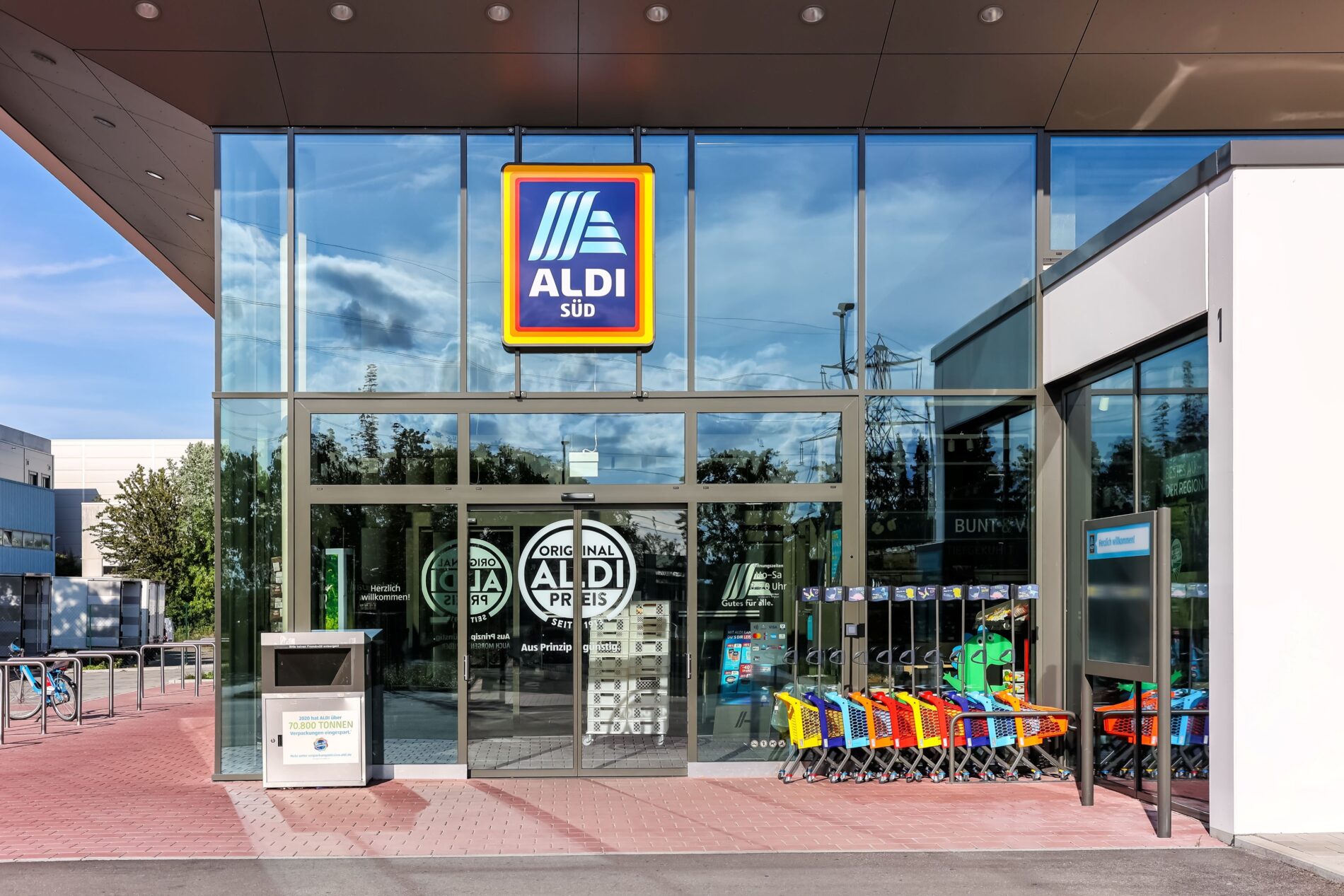
The restructuring follows a clear strategy, but it affects employees at a key location. The discount retailer is increasingly relying on central platforms and common standards. This shifts responsibilities while local structures become less important. It also creates greater pressure to automate or reorganize routines.
Job cuts already implemented in other countries
This approach is not new, but rather part of an international strategy. In the US, the UK, and Austria, the discount retailer has already eliminated hundreds of jobs to establish similar processes worldwide. Aldi Süd aims to operate more quickly and reduce costs through this strategy. At the same time, decisions in multiple markets are to be made according to the same rules.
Larger companies often implement such programs in phases, because systems are first built and then rolled out. Therefore, the cuts in Mülheim appear to be the next step in a longer transformation. Furthermore, they align with the goal of streamlining structures and consolidating tasks where they can be performed for multiple countries simultaneously.
Salzburg becomes the hub for purchasing and human resources
Salzburg is a key component of the realignment. The company plans to relocate strategic expertise to Salzburg so that key decisions can be made centrally in the future. In particular, decisions regarding global procurement and human resources will be more closely coordinated there. This will change the role of the German headquarters. Not every key decision will then be made in Mülheim.
At the same time, Aldi Süd is separating strategic management from day-to-day operations more clearly. While Salzburg is being established as the decision-making center, recurring tasks are being outsourced to external service providers. Genpact is mentioned as one such provider because these companies can handle standardized processes at a large scale. This will reduce the need for internal staff while increasing reliance on service providers.
Aldi Nord appears to be pursuing a different course so far
The comparison with its sister company is striking: As of now, no similarly large-scale plans for job cuts are known at the discount chain Aldi Nord. This leaves open the question of whether both groups will ultimately follow the same path or prefer different models. However, this situation could change, as centralization programs are often implemented gradually and then expanded to other areas.
Nevertheless, this development sends a clear signal to Mülheim. Aldi Süd is consistently pushing ahead with standardization, while its administration is becoming more internationally organized. At the same time, the scale of the changes demonstrates that this is not about isolated adjustments, but rather a structural overhaul of the headquarters.