
The global shortage of gas turbines is worsening, but it is primarily the exploding prices that are increasingly hindering the construction of new gas-fired power plants. This development is triggered by the rapidly growing electricity demand of AI data centers, while consumption in industry, transportation, and buildings is also rising. The market is concentrated in the hands of just three major manufacturers: Siemens Energy, GE Vernova, and Mitsubishi Heavy Industries. This dominance further exacerbates the bottleneck. The result is fierce competition for the few available turbines, while delivery times can stretch for years. The cost increase is particularly critical: New combined cycle gas turbine (CCGT) power plants now cost many times more per kilowatt than they did previously, and the prices for the turbines themselves are also rising dramatically. This puts even planned projects under economic pressure, while increasing the risk of delays, project cancellations, and future power shortages. (energycentral: 02.04.26)
Three corporations control the bottleneck
The market for large gas turbines is extremely concentrated. Siemens Energy, GE Vernova, and Mitsubishi Heavy Industries control the majority of global production. This technology is highly complex, and manufacturing takes many months. Therefore, capacity cannot be expanded in the short term. At the same time, suppliers are also reaching their limits, while orders continue to increase.
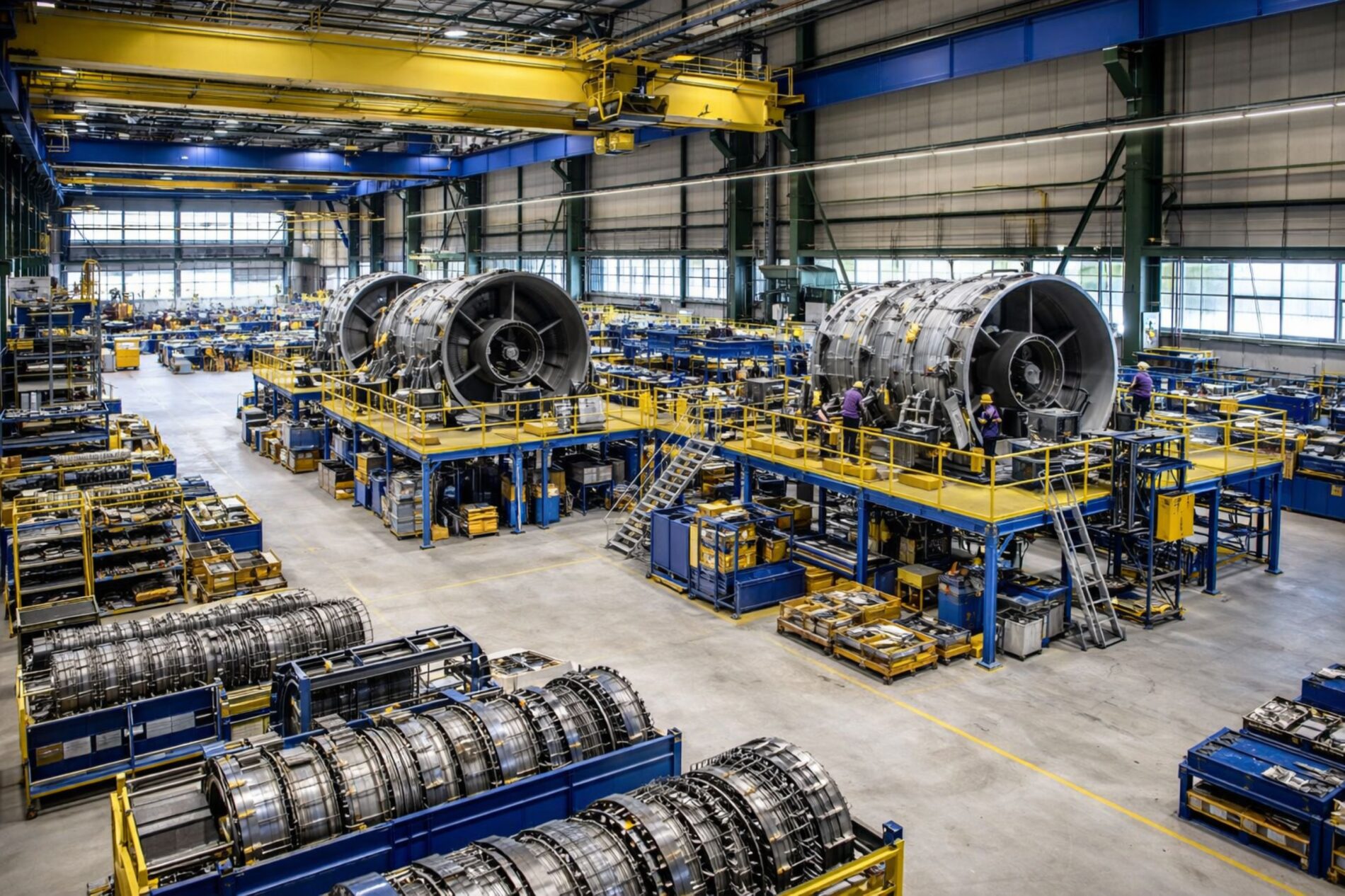
This clearly shifts the balance of power in favor of manufacturers. Anyone planning a gas-fired power plant today must secure a production slot very early on. In many cases, standard orders are no longer sufficient. Developers have to pay reservation fees, and manufacturers sometimes demand substantial, non-refundable down payments. The bottleneck is therefore not just a technical problem, but has long since become a cost and procurement risk.
Prices are rising much faster than expected
The drastic price increase is particularly critical. New combined cycle gas turbine (CCGT) power plants cost significantly less just a few years ago; now, construction costs per kilowatt are many times higher. The turbines themselves are also becoming noticeably more expensive. This is becoming a major burden for project developers because many projects can hardly be made economically viable with older calculations.
This is precisely why delays and project cancellations are looming. When construction costs rise, financing comes under pressure. When delivery times increase at the same time, commissioning is also postponed. Both factors combined make new power plants considerably riskier. The bottleneck is thus hitting the industry doubly hard: there is a shortage of turbines, and the few available plants are becoming increasingly expensive.
AI Data Centers Exacerbate the Shortage
The strongest new price driver is coming from the field of artificial intelligence. Data centers require large amounts of electricity around the clock, which is why many operators rely on reliable power plant capacity. This demand is hitting an already strained market. Especially in the US, tech companies and utilities are securing capacity early because they want to bring new projects online quickly.
This is intensifying the global competition for power. Large and financially strong consumers can more easily afford high fees and block production windows earlier. This puts other countries at a disadvantage. This is particularly problematic for countries that want to replace coal-fired power plants but need new gas-fired power plants as a transition. If turbines are unavailable or become unaffordable, old coal-fired plants will continue operating longer.
For many countries, the shortage is becoming an energy risk
The scarcity has far-reaching consequences, especially in emerging economies. Electricity consumption there is often growing rapidly, while at the same time new power plant capacity is urgently needed. If projects are postponed due to a lack of turbines, the risk of supply problems increases. Simultaneously, rising prices are making new investments more difficult. For many operators, procurement alone is becoming a hurdle.
The shortage of gas turbines is therefore developing into a central problem for global electricity supply. It is not only slowing down the construction of new gas-fired power plants, but also driving up costs and intensifying competition for available technology. As long as production does not grow significantly faster, higher prices, long waiting times, and fierce competition for turbines are likely to continue to characterize the market.