
EnBW’s battery storage subsidiary Senec is once again under scrutiny due to fires and explosions involving Senec home storage systems in recent years. As a result, Senec replaced approximately 100,000 storage units for customers, according to the company, incurring costs in the “hundreds of millions.” EnBW is now examining several options, including continuation of the business, significant downsizing, or sale. A spokesperson confirmed: “Yes, EnBW is currently also considering a sale,” while stating that the goal is “to lead the company into the future with a suitable investor.” (stuttgarter-zeitung: 07.02.26)
Replacement program following defects almost complete
This move didn’t come out of nowhere, but rather after years of serious quality problems with home energy storage systems. Senec had to take extensive action due to fires and explosions, which is why the company launched a large-scale replacement program. According to EnBW, this process is almost complete, “except for a few exceptional cases.” A total of “around 100,000 storage systems have been replaced at customer sites,” which illustrates the scale of the problem.
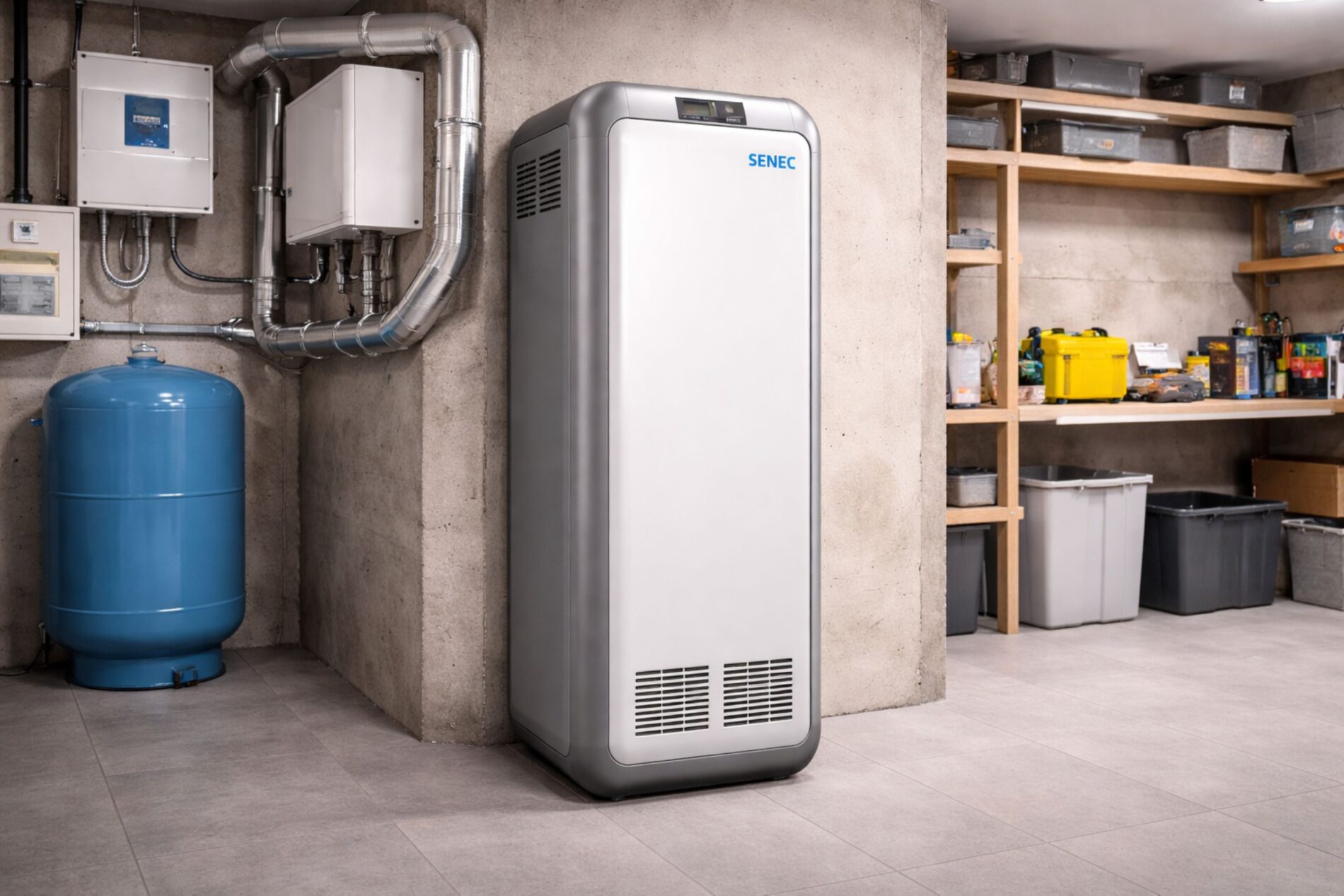
Financially, the field replacement has left deep scars, and EnBW is talking about enormous sums. The spokesperson puts the burden at costs in the “three-figure millions.” At the same time, the company is trying to put the matter behind it. “We have mapped all risks for the future and do not expect any further significant burdens.”
A decision is expected in 2026
CEO Georg Stamatelopoulos is moving quickly, while the strategic situation remains open. “We have to make a decision for Senec,” he said in an interview with the newspaper. He clarified that, regardless of the path taken, no further large-scale write-downs are expected. Insolvency is not planned; rather, the question is: continue independently, downsize, or start anew with a new owner.
At the same time, EnBW points to progress in customer satisfaction, although trust remains a sensitive factor. “The field replacement was a key measure to take responsibility and thus regain trust,” the company stated. EnBW sees “increasingly positive customer reviews” as a result. This message aims at stability, even though the Senec brand has suffered considerably recently.
Growth Only with Fresh Capital
According to the company, Senec has revised its offerings and restructured internally, which should enable renewed growth. The company expects “a significant increase in storage sales.” However, higher volume requires capital, which is why additional investments are cited as a prerequisite. This is precisely where a key aspect of the sale review lies, because an investor could finance the expansion more quickly than the company alone.
The Senec debate also coincides with a period in which EnBW is making major adjustments elsewhere. The company is withdrawing from two offshore wind projects in Great Britain and writing off €1.2 billion. “Under current conditions, the projects are simply no longer economically viable,” said Stamatelopoulos. When they first invested in 2021, “the world was a different place,” due to factors such as interest rates and supply chains.
Offshore Withdrawal as a Signal for a Tough Risk Policy
Stamatelopoulos rejects any personal blame, even though the sum is politically and economically significant. “I see no organizational or personal failure.” The withdrawal is a consequence of risk assessment, not symbolism, and he draws a clear line: “We are not prepared to build offshore wind farms at any price. That’s why we pulled the plug.” Senec also fits into this pattern, because EnBW is prioritizing projects and investments based more strongly on risk and capital requirements.