
According to calculations by Norwegian economics professor Jan Emblemsvåg, Germany’s nuclear phase-out has resulted in additional costs of around €330 billion. This equates to approximately €3,900 per capita and around €15,600 for a family of four. The core issue is the decommissioning of functioning nuclear power plants, even though Germany subsequently had to subsidize new gas-fired power plants, further subsidize renewable energies, and bear additional system costs. Experts consider this a serious energy policy error because it simultaneously resulted in the loss of affordable and reliable electricity for industry, digitalization, and AI data centers. According to several experts, the consequences range from high burdens for taxpayers and electricity consumers to increased electricity imports, greater dependence on foreign suppliers, and risks to growth and energy supply. (bild: 15.03.26)
A nuclear phase-out will cost €3,900 per capita, according to a study
Manuel Frondel of the Leibniz Institute calls the nuclear phase-out “the biggest energy policy mistake of recent decades.” He says, “We’re talking about hundreds of billions of euros that Germany has lost economically.” He’s referring not only to direct expenditures, but also to lost value creation and weaker growth prospects. Frondel also points to the 2009 energy forecast, which he helped to develop. This study by the German government concluded even then that extending the operating lives of nuclear power plants by twelve years would have yielded economic benefits of more than €100 billion.
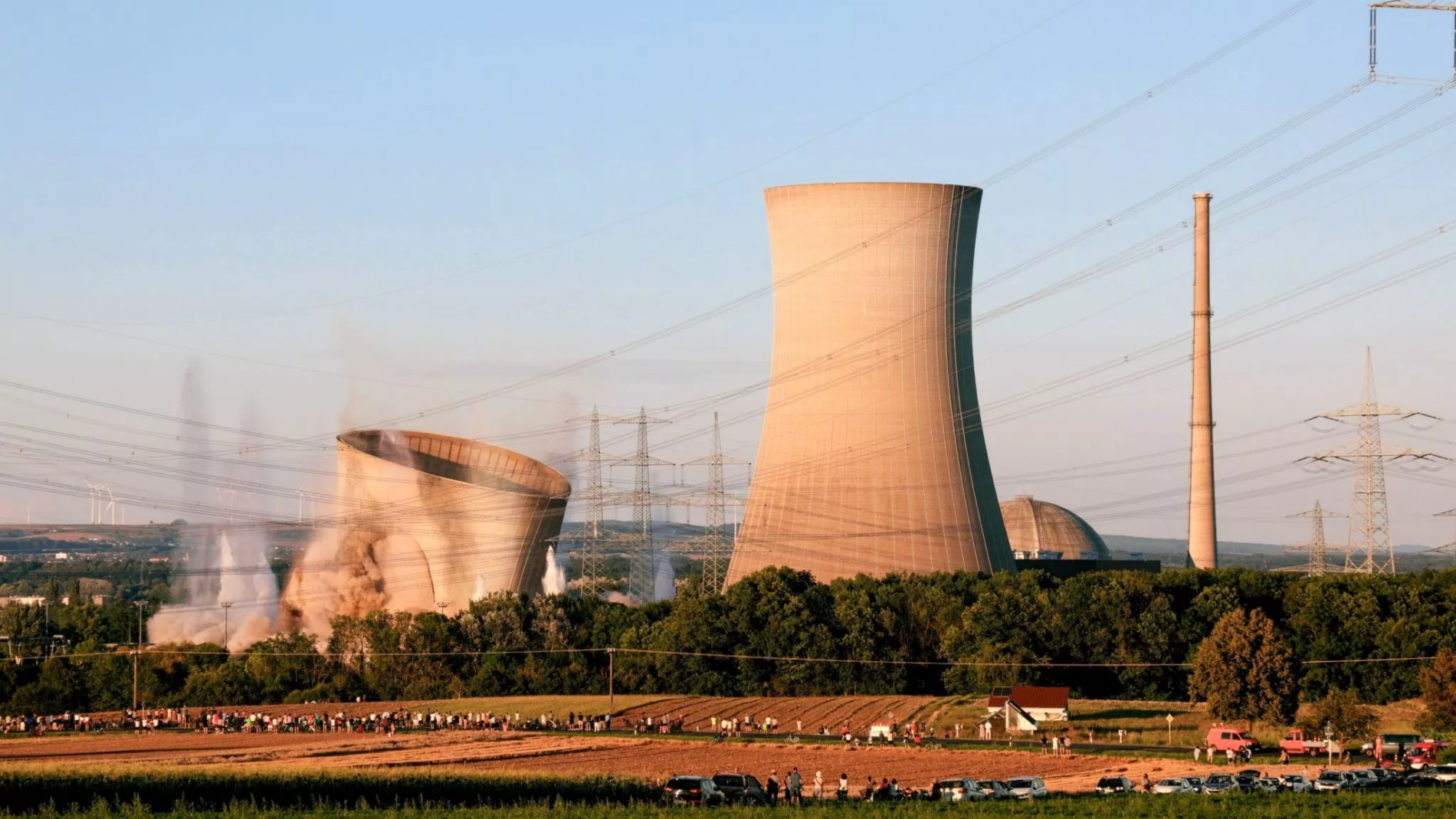
Jan Emblemsvåg’s calculations are even more concrete. In his study, he compares the costs of the energy transition with a scenario in which Germany had continued to rely on nuclear power. He takes into account investments, operating costs, and government subsidies, resulting in additional costs of around 330 billion euros. This sum equates to approximately 3,900 euros per capita.
More Imports and Less Reliable Electricity
André Thess from the University of Stuttgart also sees serious consequences for the electricity market. He says: “After phasing out nuclear power, Germany has gone from being an electricity exporter to an electricity importer. We regularly buy electricity from abroad at high prices, including French nuclear power.” He describes a profound shift because Germany has lost reliable domestic generation and is simultaneously more dependent on imports. Regarding the dependence on renewable technologies, Thess adds: “On the latter point, I would like to point out that solar panels and wind turbines don’t fall from the sky; they are imported from China.”
However, the assessment of electricity prices is somewhat more cautious. Frondel expects a rather limited effect on electricity prices. He anticipates “one to two cents less per kilowatt-hour.” The reason lies in the price structure. Taxes, levies, and grid fees make up a large portion of the electricity price.
Nobel laureate in physics Klaus von Klitzing offers a significantly harsher assessment. He says: “It’s a fact that a country’s gross national income is roughly proportional to its energy consumption, and our prosperity depends on cheap energy. In that sense, it was madness to shut down functioning nuclear power plants in Germany.”
EU Commission President Ursula von der Leyen also criticizes the nuclear phase-out. She called it a “major strategic error.” The criticism isn’t just directed at the high per capita costs. It also points to a deeper problem. Industry, digitalization, and AI data centers need reliable and affordable electricity. According to critics, weather-dependent generation alone cannot meet this demand.