
In 2025, around 24,000 companies in Germany filed for insolvency. This was almost ten percent more than the previous year and the highest number since 2014. On average, this wave of insolvencies hit a company every 20 minutes. High energy costs, increasing bureaucracy, geopolitical risks, and weak demand are increasingly burdening Germany as a business location. The war with Iran exacerbated the situation further, as oil and gas prices rose again, making production, procurement, investment, and planning more difficult. Small and medium-sized enterprises (SMEs) are particularly affected, but the risk extends far beyond this sector. Currently, 322,470 companies are considered at risk of insolvency, representing 10.3 percent of all companies in Germany. (focus: 14.03.26)
Bankruptcy wave intensifies due to war and energy prices
For many businesses, 2025 brought not a recovery, but another setback. While there had been some positive signs beforehand, these quickly lost their momentum due to the war in Iran. With higher oil and gas prices, the burden on many sectors increased immediately. This particularly affected companies heavily reliant on energy costs, transportation, or intermediate goods.
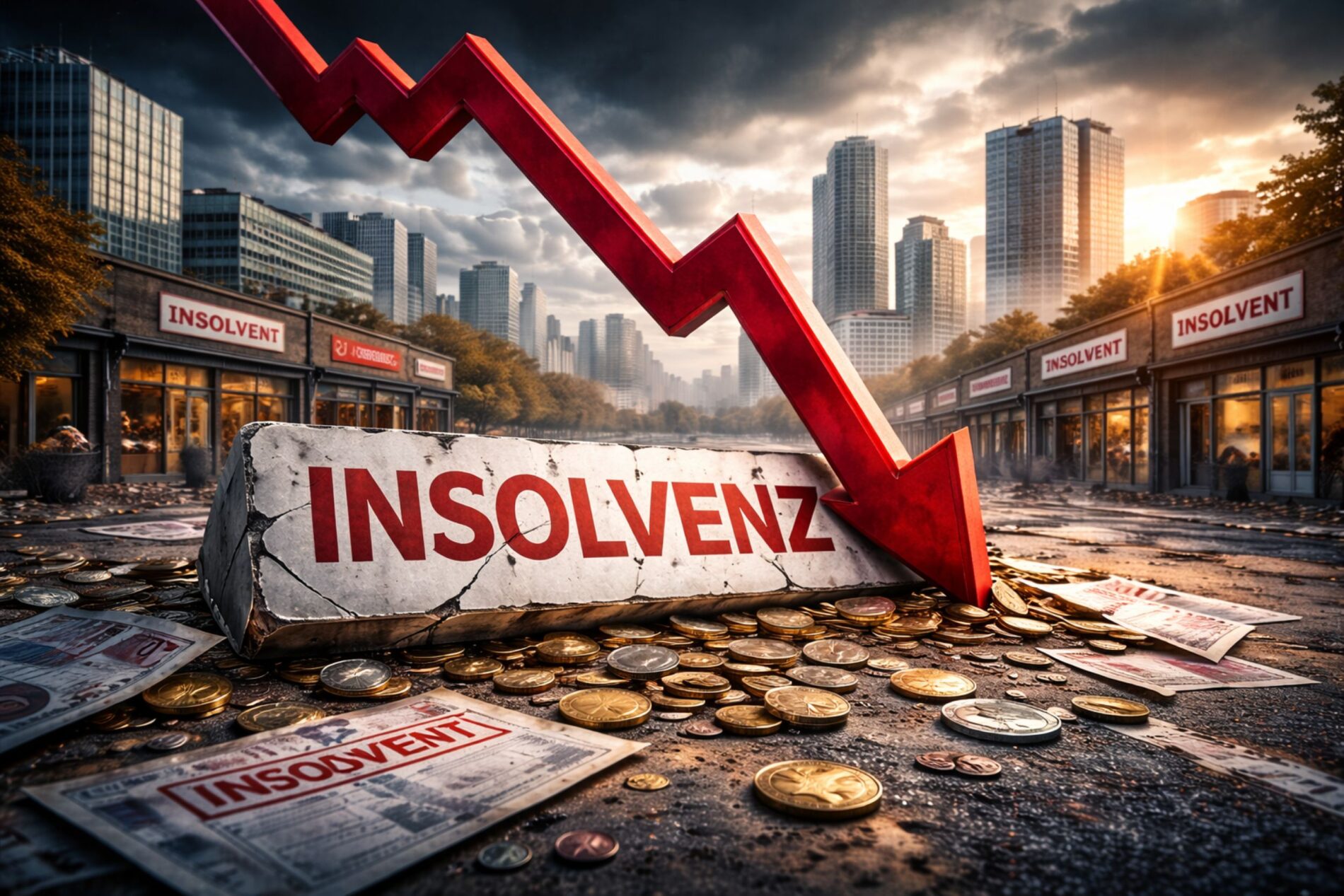
At the same time, many consumers held onto their money because the cost of living remained high. This weakened sales, while numerous companies were already operating with tight margins. Added to this were bureaucratic burdens and an uncertain global situation, which further hampered investment. Volker Treier, head of foreign trade at the Association of German Chambers of Industry and Commerce (DIHK), commented: “2025 was an exceptionally weak year for Germany as a business location.” He also stated: “On average, a company in Germany had to file for insolvency every 20 minutes.”
Regional differences are significant
The wave of insolvencies was particularly high in Berlin. There, 117 bankruptcies occurred per 10,000 companies, while the national average was 77. North Rhine-Westphalia (103), Hamburg (98), Hesse (88), and Bremen (85) also significantly exceeded the national average. Bavaria, on the other hand, only reached 56 and therefore remained well below the average.
In absolute numbers, North Rhine-Westphalia topped the list with 6,502 insolvencies. Following behind were Bavaria with 3,316 cases and Baden-Württemberg with 2,706 cases. Hesse stood out in the particularly sharp increase compared to 2024, with a rise of 27.2 percent. Thuringia saw an increase of 21.7 percent and Saxony-Anhalt 20.4 percent. Only Saarland deviated from this trend, with a decrease of 27.9 percent in the number of company insolvencies.
Young companies are particularly hard hit by the crisis
The wave of insolvencies hit younger companies the hardest. Almost 59 percent of insolvent firms were less than ten years old, while companies five to six years old, at 15 percent, constituted the largest single group. This demonstrates how vulnerable young business models remain in a period of high costs and weak demand. At the same time, they often lack the reserves to weather prolonged crises.
Older companies fared somewhat better, but they too were not spared. Companies with more than ten years of market presence accounted for 41 percent of insolvencies. Furthermore, no relief is in sight for 2026, as the wave of insolvencies could swell significantly further due to the massive increase in energy costs resulting from the Iran-Iraq War.