
A new study on a return to nuclear power revives a long-standing energy policy debate, set to resurface in late June 2026. It suggests that the reactivation of five German reactors—Brokdorf, Emsland, Isar 2, Neckarwestheim 2, and Grohnde—would theoretically be possible by 2031. The report estimates the potential levelized cost of electricity at around 37 euros per megawatt-hour. However, decommissioning activities, the Atomic Energy Act, operator refusals, and staffing issues act as barriers to any practical implementation. The study outlines a technical and economic option.
Decommissioning determines pace and feasibility
The report evaluates a total of 14 German nuclear power plants based on their condition, costs, and schedules. The five plants that were shut down most recently—or relatively late—form the first group. In addition, the authors highlight existing sites, grid connections, and technical documentation.
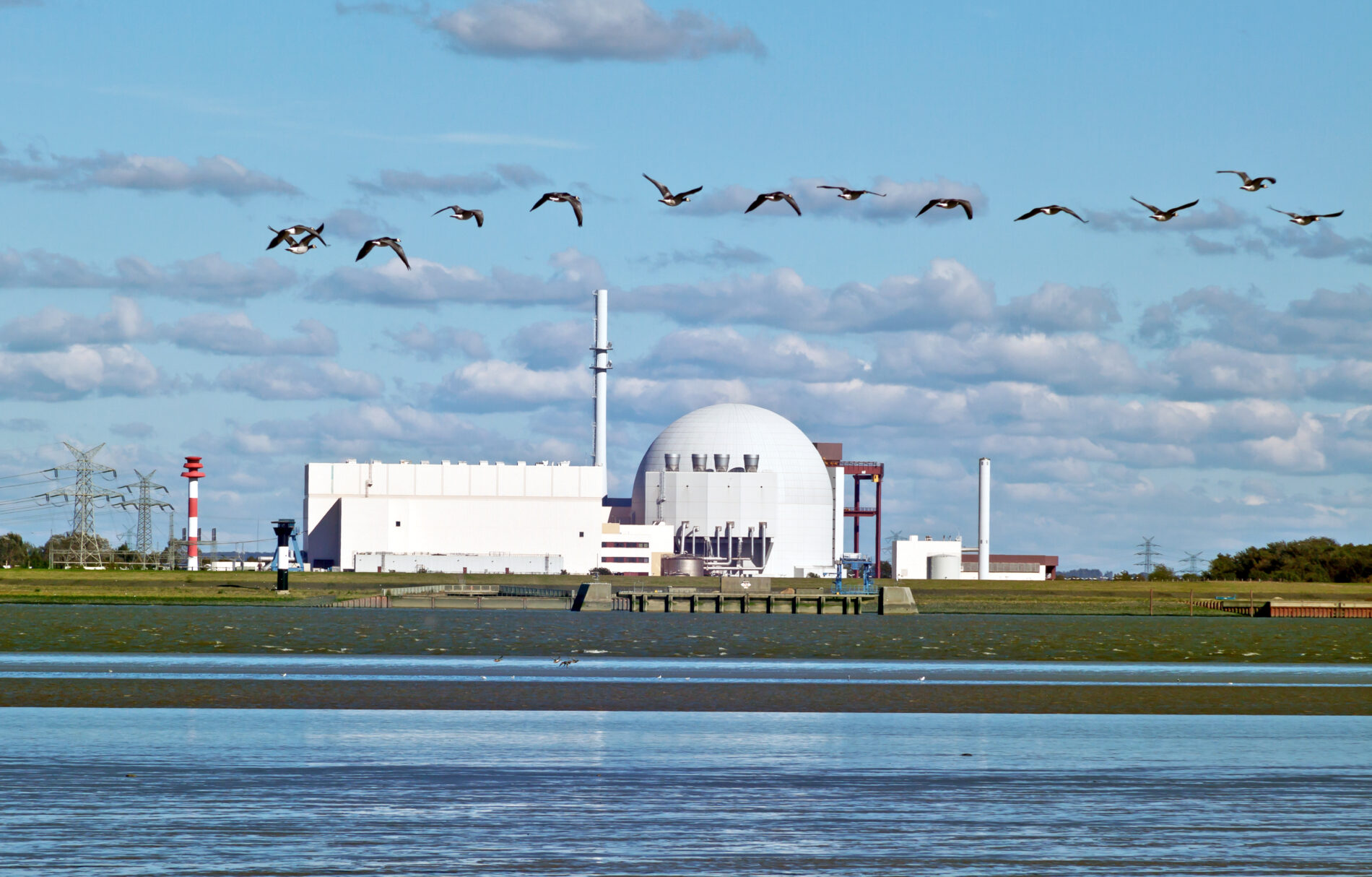
Image: Shutterstock
For this first group, the analysis cites timeframes of 41 to 50 months. Brokdorf and Emsland fall at the lower end of this range. According to this calculation, Isar 2, Neckarwestheim 2, and Grohnde would require more time. Consequently, a 2031 target would only be realistic if policymakers, authorities, and operators acted very quickly.
A Return to Nuclear Power Would Not Be a Surefire Success
The economic calculation is the most striking part of the study. The Radiant Energy Group and Nuklearia estimate the levelized cost of electricity for the most suitable plants at an average of around 37 euros per megawatt-hour. This figure would be well below the German day-ahead average of 89.32 euros per megawatt-hour projected for 2025. However, the question of who would assume responsibility for investments, liability, and licensing risks remains open.
Nuklearia presented the report in Germany on June 29, 2026. The association openly advocates for nuclear power and must therefore be classified as a source with a vested interest. At the same time, according to Nuklearia, German nuclear experts associated with the group contributed to the analysis. Additionally, Noah Jakob Rettberg, Nuklearia’s deputy chairman, served as a co-author and technical editor.
Experts Call for a Halt to Decommissioning
Rettberg articulates the political message clearly: “Germany’s nuclear phase-out was described as irreversible, but that is not the case.” In his view, a return to nuclear power depends primarily on political will. Nuklearia is therefore calling for a moratorium on further decommissioning.
In addition, former power plant managers point to the expertise that remains available and to international experience with German reactor types. In a letter to Chancellor Friedrich Merz, Economics Minister Katherina Reiche, and Union parliamentary group leader Jens Spahn, they advocate for a re-evaluation. They also view reactivated nuclear power plants as a potential solution to high industrial electricity prices and a lack of firm capacity.
Operators and the law remain the biggest hurdles.
From a legal standpoint, restarting operations would first require an amendment to the Atomic Energy Act. The Bundestag previously considered motions in 2026 to evaluate the status of shut-down nuclear power plants; however, a motion to this effect was rejected by the Economic Affairs Committee. Consequently, there is currently no political majority in favor of a restart.
The operators, too, are continuing with decommissioning. PreussenElektra opposes restarting Isar 2 and Brokdorf. A spokesperson stated: “Restarting these power plants has long ceased to be an option for us.” Therefore, a return to nuclear power will not be decided by a study alone. However, every additional month of dismantling reduces the available technical options and the pool of skilled personnel.
Author: Blackout News
Sources: Bild (29.06.26) – Nuklearia (29.06.26) – Radiant Energy Group (29.06.26) – Deutscher Bundestag (22.05.26)