
North Sea, mid-August 2026: With “He Dreiht,” Germany’s largest offshore wind farm is on the verge of full commissioning. EnBW has installed 64 wind turbines with a combined capacity of 960 megawatts approximately 110 kilometers west of Heligoland. The wind farm alone represents an investment of around 2.4 billion euros. At the same time, however, EnBW is warning of sharply rising costs for the further expansion of offshore wind power. According to CEO Georg Stamatelopoulos, the costs of turbines, cables, and logistics have increased by 30 to 40 percent over the past five years. Added to this are the costs for grid connection and integration into the power system.
Offshore wind power is becoming significantly more expensive than previously estimated
This deals a major blow to the long-standing narrative that renewable electricity is becoming ever cheaper. After all, low generation costs per kilowatt-hour capture only a fraction of the actual burden. Electricity from wind turbines is not generated on demand but rather in line with weather conditions. Consequently, an increasingly weather-dependent power system requires more robust grids, dispatchable power plants, flexibility, and—looking ahead—large-scale storage capacities. It is precisely these additional requirements that lie at the heart of the current debate surrounding the “He Dreiht” project.
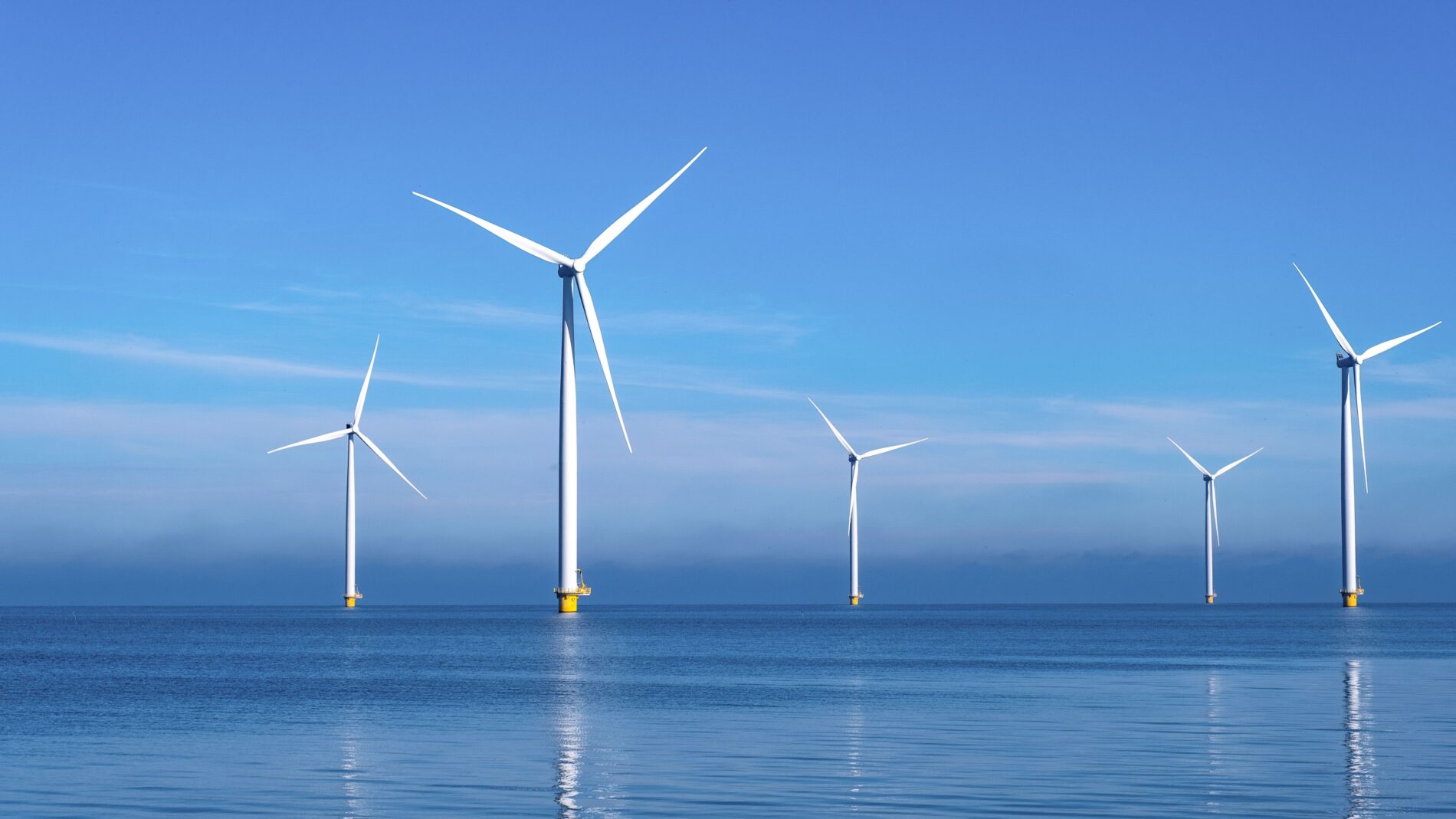
Image: Shutterstock
EnBW itself is now sending a clear warning signal. CEO Stamatelopoulos described the economic situation in the industry as having “dramatically deteriorated”. Within five years, turbines, logistics and cables had become 30 to 40 percent more expensive. Over 15 years, the cost increase is even more than 50 percent. That’s why he’s calling for Germany’s offshore target to initially be limited to 55 gigawatts. The federal government, on the other hand, is still planning 70 gigawatts by 2045.
Grid connection also ends up on the electricity bill
The 2.4 billion euros for He Dreiht therefore do not represent the complete economic calculation. TenneT connects the park to the German power grid via a converter station and high-voltage cables. The connection runs around 120 kilometers through the North Sea and then another 110 kilometers overland. Such offshore connections cause significant additional infrastructure costs.
These costs do not disappear, but end up with consumers via the electricity system. Since 2019, the offshore network levy has also explicitly financed the construction and operation of the offshore connection lines. In 2024 it was 0.656 cents per kilowatt hour. In 2025 it rose to 0.816 cents and in 2026 again to 0.941 cents. Within two years the increase is more than 40 percent. Offshore wind power not only requires billions in investments at sea, but also increasingly expensive infrastructure on land and in the sea.
Low-cost wind power tells only part of the cost story
Then there is the issue of fluctuating power generation. EnBW expects the He Dreiht project to generate around 3.6 billion kilowatt-hours annually—an output it equates to the needs of approximately 1.1 million households. However, this figure represents only an annual total; it does not mean the wind farm can supply these households at any given moment. Output drops sharply during periods of calm, while at other times, large volumes of wind power require sufficiently sized grids for distribution.
This is precisely why comparing generation costs in isolation falls short. The Federal Network Agency explicitly confirms that the energy transition has direct and indirect impacts on grid charges. At the same time, the federal government is subsidizing transmission grid charges for 2026 with €6.5 billion from the Climate and Transformation Fund to reduce the financial burden on electricity consumers. While this figure applies to the entire transmission grid rather than just wind power, it illustrates the extent to which the actual costs of the electricity system now exceed the mere market price of a kilowatt-hour. Given these cost trends, the claim that increasing offshore wind capacity automatically leads to ever-cheaper electricity is difficult to sustain.
Author: Blackout News
Sources: Focus (14.08.26) – Die Zeit (12.08.26) – Bundesnetzagentur (Stand 14.08.26) – EnBW (Stand:14.08.26)