
Germany, August 2026: Grid connections are becoming a bottleneck for industry, data centers, and battery storage systems. The issue is not a fundamental lack of electricity, but rather the limited transmission and connection capacity of the grids. By the end of June, the four transmission system operators alone had received requests totaling more than 200 gigawatts. Battery storage systems and data centers accounted for around 93 percent of this volume. In distribution grids, too, the requested power capacities often exceed available limits by a wide margin. Consequently, companies at many locations are unable to secure the electrical power needed for new facilities on short notice. At the stove manufacturer Leda in Leer, for instance, this is delaying the electrification of production until 2027 at the earliest.
Grid connections thwarted by limited grid capacity
The decisive factor is the power available at the specific connection point. Consequently, a cable alone does not solve the problem; substations, power lines, and upstream grid levels must also be capable of handling the additional load. It is precisely here that bottlenecks are increasingly arising. The Federal Network Agency explicitly distinguishes between the physical connection and the actual available connection capacity.
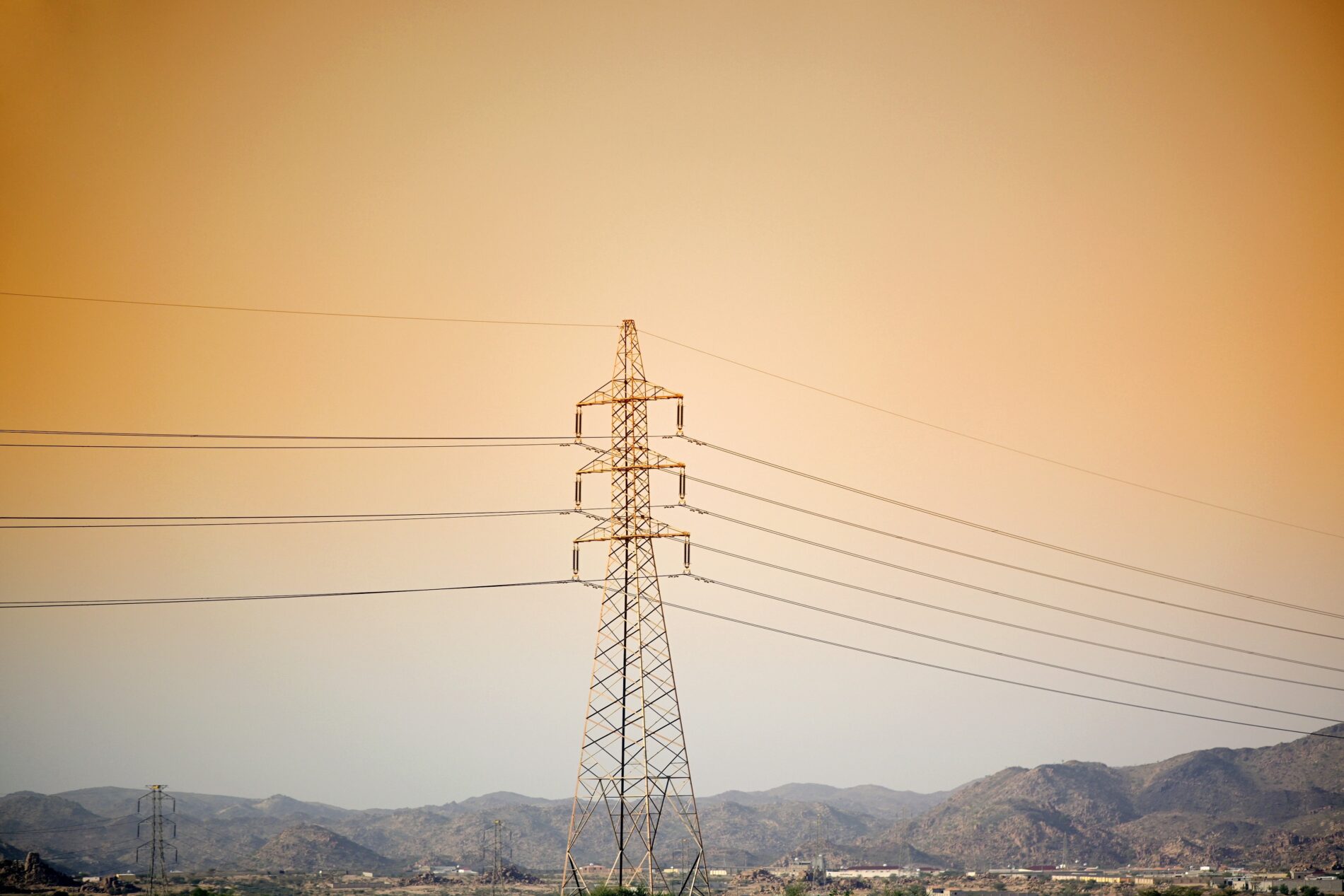
Image: Shutterstock
An NDR survey of 852 distribution grid operators illustrates the scale of the situation. Seventy-eight companies provided concrete capacity data. For these companies, the requested grid connections averaged 324 percent of their respective grid capacities. In Hamburg, connection requests totaling 2,750 megawatts contrast with an annual peak load of 1,800 megawatts. In the Hanover area, requests amounting to over 1,000 megawatts face an annual peak load of just 500 megawatts. The ratio is particularly extreme at WEMAG Netz, where requests total over 32,000 megawatts, while the annual peak load is 417 megawatts.
Battery storage systems intensify the competition for grid connection capacity
Large-scale battery storage systems currently account for a significant share of these requests. They require grid connections for both charging and feeding power into the grid, thereby claiming capacity on both sides of the network. By the end of 2025, the BDEW had recorded storage connection requests totaling 729 gigawatts across transmission system operators and 17 distribution grid operators. In contrast, only 78 gigawatts had been approved. However, at least half of these projects are unlikely to ever materialize due to duplicate applications or speculative intent.
The enormous number of applications does not mean that Germany suddenly needs to provide hundreds of gigawatts of additional power plant capacity. Instead, project developers often reserve capacity at multiple locations simultaneously. This ties up processing resources and complicates planning for grid operators. At the same time, actual demand is rising due to data centers, industrial electrification, electrolyzers, and battery storage systems. However, in many places, the expansion of power lines and substations cannot keep pace with this rate of growth.
Industry Faces Wait for Electrical Power
The bottleneck has immediate consequences for industrial enterprises. Leda, based in Leer, plans to replace a coke-fired melting furnace with an electric induction furnace. However, the plant requires significantly higher grid connection capacity for this upgrade. Under current projections, grid operator EWE Netz will likely not be able to provide this capacity until 2027. Managing Director Fynn-Willem Lohe also points to dozens of other foundries facing similar issues. Consequently, grid connections are increasingly becoming a deciding factor in whether investments in electrification can be implemented in the near future.
Meanwhile, policymakers are attempting to redistribute scarce grid capacities. Since April 2026, the four transmission system operators have been using a “maturity-based” process. Under this system, the order in which applications are received is no longer the sole deciding factor; instead, projects that are more advanced and realistically feasible are given better prospects. However, 50Hertz has already indicated that, due to existing reservations, it will likely not be possible to launch new projects before 2029. Additionally, on July 29, the Federal Cabinet adopted a grid connection package designed to accelerate connection procedures and better align the expansion of new facilities with available grid capacity. While new allocation rules can distribute existing power more efficiently, they do not create additional grid capacity.
Author: Blackout News
Sources: NDR (25.08.26) – Bundesministerium für Wirtschaft und Energie (12.08.26) – 50Hertz (Stand: 25.08.26) – Bundesregierung (29.07.26)