
The federal government is planning a new national gas reserve and intends to pass the associated costs on to gas customers. A draft bill from the Federal Ministry for Economic Affairs, dated October 12, 2026, provides for expenditures of up to 3.08 billion euros over ten years for this purpose. The additional levy is set to take effect in October 2027, placing a financial burden on both households and businesses. Federal Minister for Economic Affairs Katherina Reiche (CDU) aims to use this measure to safeguard gas supplies in the event of sabotage, import disruptions, or other severe crises. However, the governing coalition had previously rejected the idea of funding the reserve at the expense of consumers as recently as this summer.
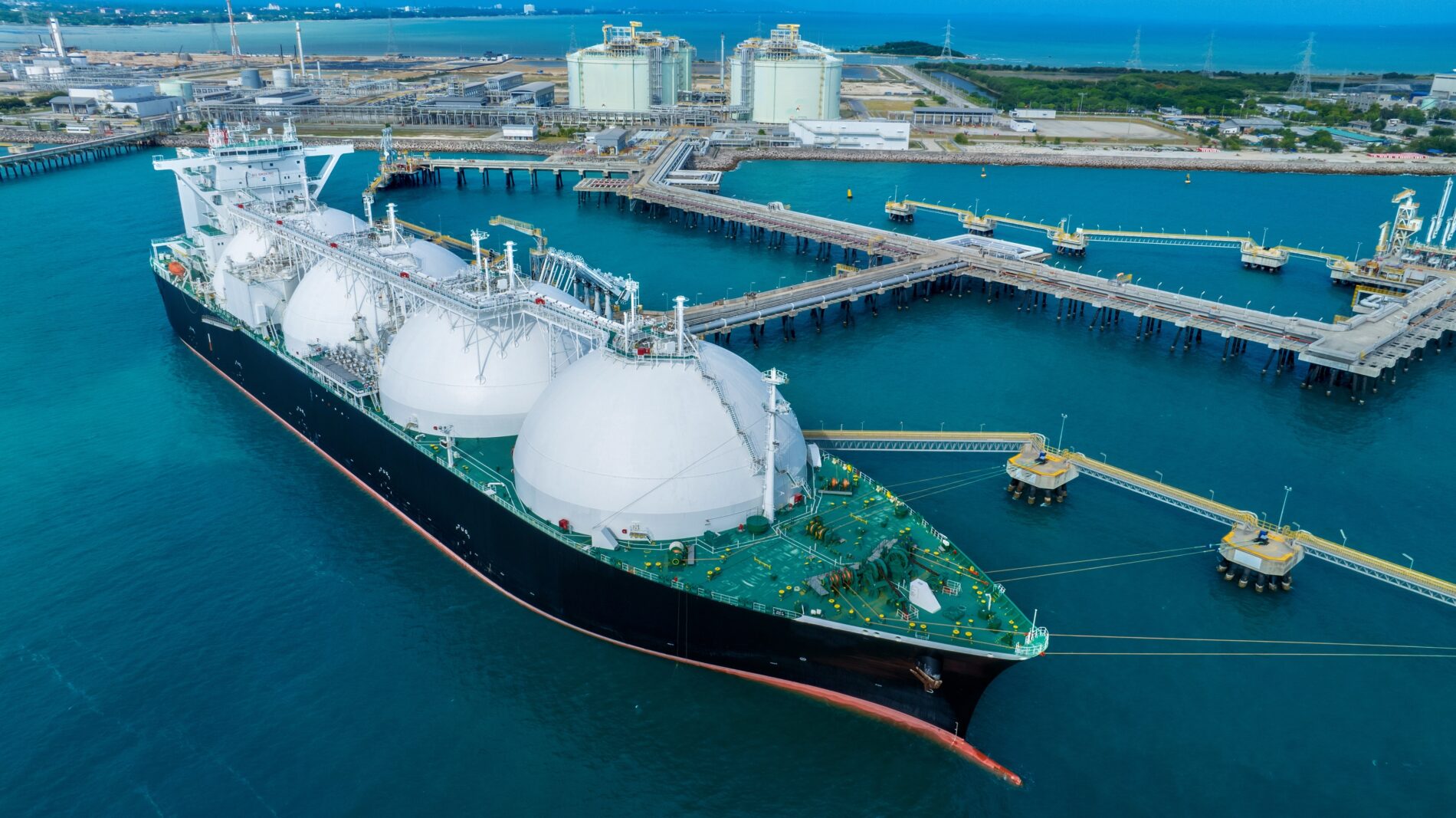
Image: Shutterstock
New gas reserve to incur additional costs starting in 2027
The planned reserve consists of 24 terawatt-hours of natural gas—equivalent to approximately ten percent of Germany’s total gas storage capacity. This volume would allow Germany to compensate for the loss of its largest gas import infrastructure for about 30 days. However, this serves as an additional security reserve and is not intended for routine gas consumption. The federal government aims to use this measure to supplement or replace existing statutory gas storage level requirements with a different form of crisis preparedness.
The Federal Ministry for Economic Affairs estimates annual costs for this reserve to be between 247 million and 308 million euros. These costs are to be covered by gas customers through a new levy. Households and commercial customers would collectively bear about 40 percent of the burden, while the industrial sector would account for approximately 60 percent. The exact amount of the levy is to be recalculated annually by the market area manager.
Gas reserve to trigger new levy following the abolition of the previous charge
The timing of the planned new regulation is particularly noteworthy. The federal government had only just abolished the previous gas storage levy on January 1, 2026—a move justified at the time as a vital measure to provide relief to consumers and businesses. Since then, the associated costs have been covered by the federal budget. Now, however, a new levy for gas supply is set to be introduced, effective from October 2027.
For a household with an annual consumption of 13,000 kilowatt-hours, the ministry estimates additional costs of at least 3.77 euros. For a single-family home with an annual consumption of 20,000 kilowatt-hours, this figure could reach up to 7.20 euros. While these amounts may seem manageable for individual households, the total burden across all consumers adds up to several hundred million euros annually. This creates additional costs—particularly for energy-intensive companies—at a time when high energy prices are already undermining their competitiveness.
Coalition had previously rejected additional burdens on gas customers
The proposed financing model is also a subject of contention within the governing coalition. Back in July, the parliamentary groups of the Union and the SPD rejected any levy that would place a financial burden on consumers, citing the already high energy costs. Consequently, the possibility of funding the reserve through the federal budget or a hybrid model was briefly discussed. Nevertheless, the current draft maintains that the costs should be covered entirely by gas customers.
The new reserve is intended for use exclusively in the event of extraordinary supply disruptions. Only after an “emergency level” has been declared would the Federal Network Agency be authorized to release the stored gas volumes. This measure is designed to prevent, for example, the forced shutdown of industrial operations. Furthermore, the state could refrain from resorting to highly intrusive measures, such as accessing private gas stocks. For standard winter operations, the gas market will continue to be responsible.
German gas storage facilities unusually low ahead of winter
These plans come against the backdrop of a strained situation regarding Germany’s gas storage facilities. According to the Federal Network Agency, the fill level stood at just 60.3 percent on October 14—equivalent to approximately 149 terawatt-hours of natural gas. These reserves are significantly lower than those seen during the same period in previous years. Nevertheless, the agency continues to assess the supply situation as stable and considers an acute shortage unlikely at this time.
At the same time, rising international gas prices are altering the economic conditions for filling storage facilities. Germany sources its natural gas primarily via pipelines and liquefied natural gas (LNG) terminals; consequently, supply is increasingly dependent on functional import routes and international supply chains. The planned reserve is intended to provide a safeguard against these very dependencies in the event of major disruptions. However, it will neither prevent global market prices from rising nor spare consumers from additional costs.
Multi-billion-euro cost for greater security of supply
The draft legislation outlines several specific crisis scenarios. The reserve would be capable of compensating for a complete loss of pipeline imports from Norway for approximately 20 days. In the event that all German LNG terminals were to fail, the reserve is intended to secure supplies for about 40 days. Should there be a total halt to imports, the available gas could—theoretically—sustain households and businesses for ten days during an exceptionally cold winter; under normal winter temperatures, this period would extend to roughly 18 days.
This provides Germany with an additional safeguard against severe disruptions to its gas supply. However, the political approach to financing remains contradictory. On one hand, the federal government has promised lower energy prices and is covering existing levy costs through the national budget; on the other, it is already planning a new charge to be imposed on the same group of consumers. It remains to be seen whether the Bundestag and the Bundesrat will approve the proposed financing model. At this stage, it is merely a draft bill.
Author: Blackout News
Sources: Handelsblatt (14.10.26) – Reuters (13.10.26) – Welt (13.10.26)