
Germany is investing billions in the development of a core hydrogen network, even though both producers and consumers are lacking in many areas. The Federal Network Agency has approved 9,040 kilometers of pipelines, with initial investment estimates of 18.9 billion euros. An expanded development plan now anticipates a cost of 24.3 billion euros. While private grid operators are building the infrastructure, the federal government is assuming significant financial risks. Yet, neither sufficient production capacity nor economically viable demand has been secured. The contrast with the electricity grid is particularly striking: in that sector, a lack of transmission capacity is already hindering concrete investments. In the case of hydrogen, by contrast, a multi-billion-euro infrastructure is being created before a functioning market has even emerged.
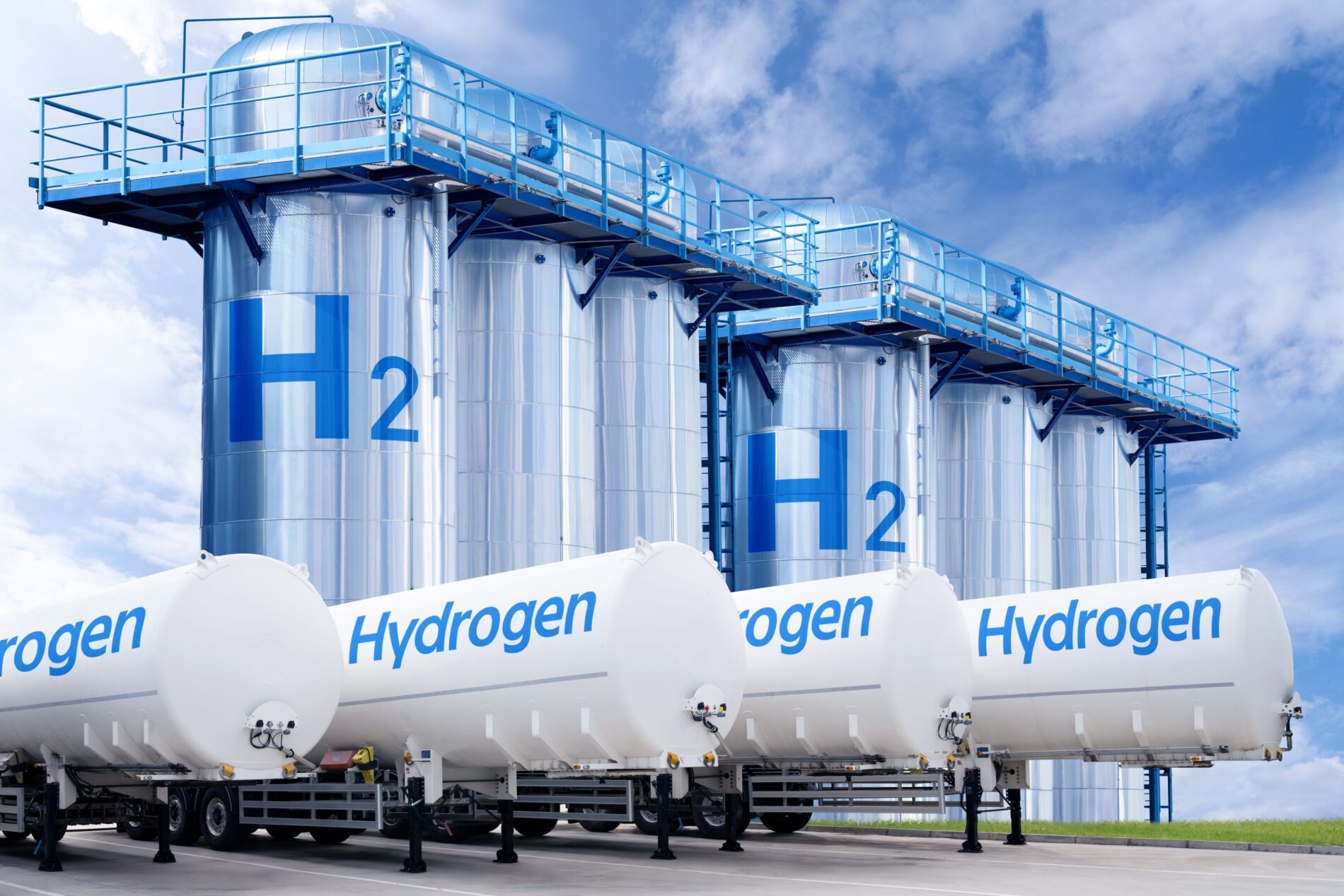
Image: Shutterstock
Hydrogen Core Network Developed Based on Political Expectations
The German federal government is pursuing an unconventional investment strategy with its hydrogen core network. Rather than serving existing transport needs, the infrastructure is intended to first establish the prerequisites for a future market. Approximately 60 percent of the approved pipelines will be created by repurposing existing natural gas pipelines, while the remaining sections will require new construction. More than 500 kilometers are already in operation, with further segments currently in preparation. Whether these assets will achieve economically viable utilization levels in the future, however, depends on developments that are not yet guaranteed.
Current demand offers little basis for an optimistic outlook. As of August, companies had reserved just under six gigawatts of transport capacity—though these do not constitute binding transport bookings. The annual reservation fee is a mere one euro per kilowatt, generating initial revenues for the operators in the mid-single-digit million-euro range. For an infrastructure project involving investments in the tens of billions of euros, this does not constitute a robust economic foundation.
Hydrogen production lags far behind expansion plans
A major bottleneck lies in the production of the energy carrier itself. By the end of March 2026, only 181 megawatts of electrolysis capacity were in operation in Germany—a figure that falls well short of the previous federal government’s target of ten gigawatts by 2030. While new facilities are being developed, there is often a gap of several years between the announcement of an investment and the start of actual production. Furthermore, planned hydrogen imports depend on production capacities abroad, transport infrastructure, and long-term contracts. Consequently, a robust German pipeline network alone does not guarantee an adequate supply.
On the demand side, costs are the primary obstacle to market ramp-up. Green hydrogen currently costs roughly two to three times as much as its fossil-fuel-based counterpart. Refinery operator Bayernoil, for instance, is still searching for reliable suppliers despite having already reserved transport capacity. Wacker Chemie, meanwhile, requires procurement prices that are economically viable, while Aurubis demands an uninterrupted supply for its production facilities. These companies face distinct challenges that new pipelines alone cannot resolve.
In the electricity sector, grid capacity falls short despite existing demand
A comparison with the electricity sector highlights the differing priorities in infrastructure development. In that sector, limited grid capacity is already causing economic constraints; operators of new power generation facilities and battery storage systems often face long waits for grid connections. At the same time, grid bottlenecks lead to additional costs due to the need for interventions in power generation. Industrial firms also require more powerful grids to connect new facilities or to electrify existing processes.
In contrast, the expansion of hydrogen infrastructure is largely being carried out in anticipation of future transport volumes. This approach is driven by the political assumption that industry and producers will only invest once the necessary infrastructure is already in place. While this approach may facilitate the creation of a new market, it also shifts significant risks into the future. Consequently, the completion of the pipelines is not the only critical factor; what truly matters is whether enough companies emerge that are willing to produce and consume hydrogen on a long-term, economically viable basis.
Federal government to cover the bulk of potential funding gaps
To address financing, the federal government has established a specific amortization model. The state-owned development bank, KfW, is providing a credit facility of 24 billion euros, which can be used to pre-finance initial revenue shortfalls experienced by grid operators. Future grid usage fees are intended to offset these accumulated amounts by 2055. Should a funding gap persist beyond that point, the federal government will generally cover 76 percent of it, with operators assuming the remaining 24 percent. It should be noted, however, that this credit facility is not equivalent to a direct, upfront government investment.
As a result, the burden on the federal budget will depend largely on future grid utilization. A slow market ramp-up would complicate repayment and extend the period for which financing is required. At the same time, low transport volumes could drive up the cost per unit of hydrogen transported—a development that would, in turn, undermine the competitiveness of hydrogen. Thus, while the government’s assumption of risk helps secure the financing for grid expansion, it does not eliminate the underlying economic uncertainties.
Billions for infrastructure with uncertain utilization
Initial projects demonstrate that an industrial hydrogen supply system is technically feasible. For instance, a pipeline is already transporting hydrogen from Lingen to the Marl Chemical Park. Furthermore, BMW is preparing a connection for its Leipzig plant, slated to become operational in 2028. EWE is planning additional electrolysis capacity of 500 megawatts by 2032. These initiatives represent concrete steps toward scaling up the market; however, their current scope is insufficient to guarantee the utilization of the entire planned pipeline network.
In doing so, the German federal government is committing substantial public funds to facilitate a market whose long-term economic viability has yet to be proven. Meanwhile, the electricity sector faces a shortage of grid capacity for existing and firmly planned investments. This highlights a fundamental issue in state infrastructure planning: while an established market is being held back by inadequate grid infrastructure, a nascent market is receiving financial backing worth billions. Ultimately, whether the core hydrogen network evolves into an economically viable infrastructure or becomes a permanent source of costs will not be determined at the construction site, but rather through the development of supply and demand.
Author: Blackout News
Sources: Ingenieur (01.10.26) – NDR (12.08.26) – Welt (08.10.26) – Reuters (13.08.26) – BDEW (10.09.26)