
Brussels, July 2026: The Belgian government is funding eight nuclear energy research projects with a total of nearly 11 million euros. The Council of Ministers acted on a proposal by Energy Minister Mathieu Bihet, following the government agreement’s prioritization of nuclear applications. From 41 applications, the Directorate-General for Energy selected eight projects focused on security of supply, decarbonization, and industrial use. However, this funding does not yet create new power plant capacity, while Belgium continues to operate only Doel 4 and Tihange 3. Furthermore, new reactors require operators, multi-billion-euro investments, permits, and solid construction plans.
Nuclear power regains a central role
Belgium has legally ended the nuclear phase-out policy that had been in place since 2003, effective May 2025. This once again permits the construction of new nuclear power plants and allows for new decisions regarding the operational lifespan of existing ones. Consequently, nuclear power is set to regain a central place in the energy mix. At the same time, the state extended the operation of the Doel 4 and Tihange 3 reactors until 2035.
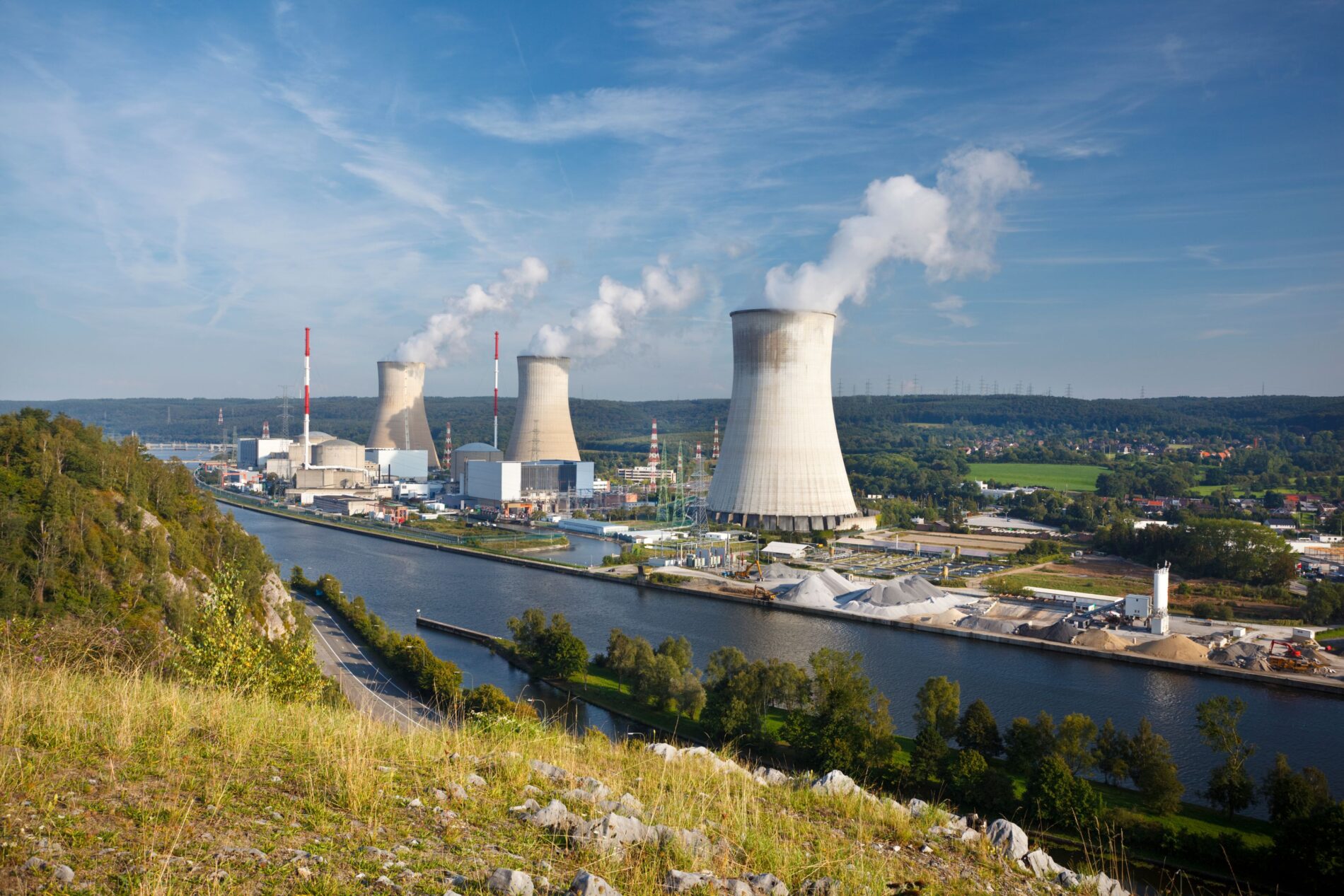
Image: Shutterstock
However, this shift in policy coincides with a significantly reduced reactor fleet. Five of the seven power-generating reactors were permanently shut down between 2022 and 2025. Consequently, only two units now provide around two gigawatts of dispatchable generation capacity. In addition, research efforts aim to preserve lost expertise and pave the way for new industrial applications.
Eight research projects cover technology, industry, and legal aspects
NuPowerBE receives the largest grant, totaling €3,972,175. This project evaluates modern reactor technology for industrial clusters, the power grid, and decarbonization efforts. The ICRH-W7X Upgrade project is awarded €2,067,116.68 for work on the Wendelstein 7-X fusion facility in Greifswald. FLEX-SMR receives €1,221,681 to develop flexible electricity and steam solutions for the chemical industry.
PRORANE is awarded €857,398 for robotic repair techniques and the manufacturing of critical components. SMART-C-HUB receives €828,255 to link small reactors with thermal energy storage systems and industrial process heat applications. Additionally, CORE-GRID receives €559,777.20 to investigate the flexible grid integration of small modular reactors. The FUSION project receives €846,631.99 but does not deal with nuclear fusion; instead, it combines SMR models with CO₂ capture, while the NUCLEAR project receives €440,357.79 to examine the legal framework for new projects.
Funding Targets SMRs and Industrial Energy Supply
At least 7.43 million euros are allocated to projects directly related to small modular reactors (SMRs). This means that approximately 69 percent of the total funding is going toward SMR studies and their integration into industrial applications. The aim is for nuclear power to supply not only electricity but also process steam and dispatchable heat. However, the projects are initially assessing the technical, economic, and regulatory prerequisites.
The energy transition fund is financed by annual levies resulting from the earlier extensions of the operating lives of Doel 1 and Doel 2. Belgium is thus using revenue from existing nuclear power plants to fund new nuclear research. However, this marked the tenth and final call for proposals under the current program. Over the course of a decade, the fund supported around 140 energy projects with nearly 200 million euros. No budget is currently available for an eleventh round, and the eight funding decrees still require the King’s signature.
Author: Blackout News
Sources: Nuklearforum Schweiz (23.07.26) – The Brussels Times (14.07.26) – NewsBelgium (13.07.26) – Mathieu Bihet (10.07.26)