
In the US, the boom in AI and data centers triggered a massive expansion of gas-fired power plants during the first half of 2026. Currently, 189 gigawatts of capacity—intended to directly supply data centers—are in the planning, pre-construction, or active construction phases; at the start of the year, this figure was roughly half as high. In total, the US pipeline for gas-fired power plants grew to 378 gigawatts. Texas is emerging as the focal point of this expansion. At the same time, however, long lead times for turbines, uncertain grid connection applications, and rising infrastructure costs are slowing down many projects.
Gas-fired power plants for AI data centers drive US expansion
Texas alone now accounts for 122 gigawatts of gas-fired power generation capacity across various project stages—an increase of 51 percent compared to just six months ago. Around 77 gigawatts of this capacity is intended to supply data centers directly. While Texas thus represents nearly a third of the US project pipeline, planned capacity is also growing significantly in other states.
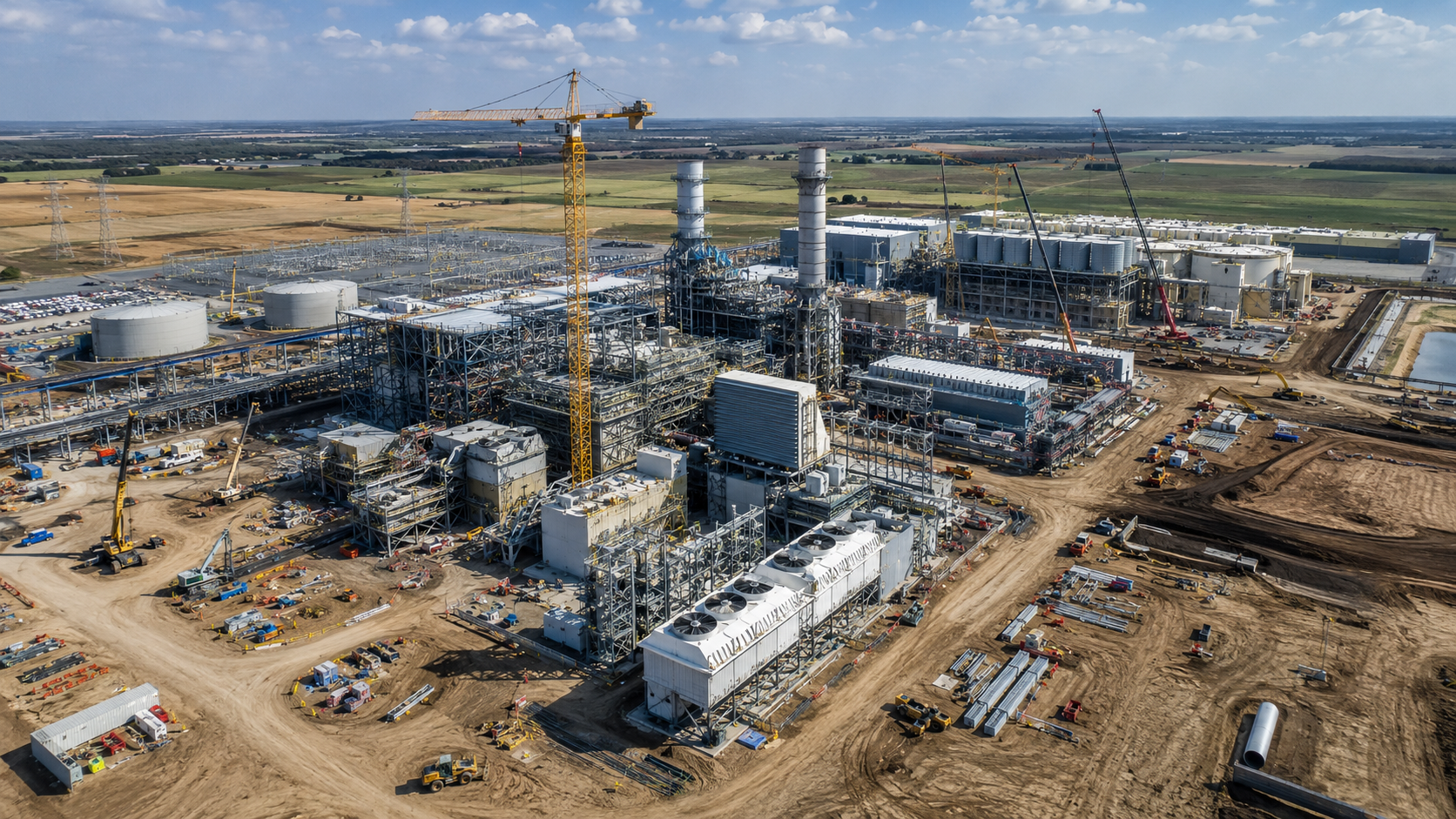
Representative image: AI-generated
However, actual power plant construction cannot yet be inferred from these plans. More than three-quarters of the global project pipeline is still in the early stages. Numerous projects lack turbine or engine manufacturers. Consequently, it remains unclear what share of the announced capacity will actually come online. In the first half of the year alone, project developers worldwide postponed approximately 45 gigawatts of capacity to later dates.
Texas responds to hundreds of gigawatts in grid connection requests
This issue is particularly evident regarding grid connections. ERCOT recently received requests for over 474 gigawatts of new load in Texas. According to data from the state, data centers account for around 90 percent of this figure—far exceeding the state’s previous peak consumption. As a result, Governor Greg Abbott ordered a comprehensive review of the projects before they could proceed further in the connection process.
Nationwide, connection requests from data centers now also total more than 700 gigawatts. However, many developers register the same project with multiple utilities or grid operators. Other projects lack secured financing or concrete construction plans. Reuters therefore reports on so-called “ghost demand,” which can significantly distort demand forecasts. At the same time, grid operators must avoid planning multi-billion-dollar investments based on projects that may never be built.
Turbine Shortage Alters Construction of New Gas Power Plants
Despite these uncertainties, actual power plant construction is already surging. In the US, 52 gigawatts of gas-fired capacity are currently under construction—an increase of 76 percent since the beginning of the year. Data center projects account for 16.9 gigawatts of this total. Furthermore, the US is currently building more than twice as much gas-fired capacity as China, which has around 24 gigawatts underway.
However, the expansion of gas power plants is increasingly hitting industrial bottlenecks. Large gas turbines now have lead times of several years. Consequently, developers are increasingly turning to gas engines and smaller aeroderivative turbines. Planned capacity for these engine-based systems rose from 31 to 67 gigawatts within six months; for data center projects alone, it tripled to 45 gigawatts. While such systems can be installed more quickly, they often operate less efficiently than modern combined-cycle gas turbine (CCGT) plants.
Nevertheless, electricity demand is expected to continue driving this expansion. S&P Global projects that US data centers will require up to 183 gigawatts of capacity by 2030. At the same time, the EIA is already recording a significant rise in electricity consumption driven by new data centers. However, following a review of projects in Texas, the agency lowered its forecast for load growth in the state for 2027 from 14 percent to 6 percent. This highlights a key trend: the AI boom is massively driving up the need for power plants, even as the actual scale of development remains contingent on real-world construction projects, grid connections, and supply chains.
Author: Blackout News
Sources: Reuters (01.09.26) – Global Energy Monitor August 26