
Ryanair’s withdrawal from Berlin deals a significant blow to the capital’s airport, BER. Citing high taxes and airport charges, the Irish carrier will close its base—which houses seven aircraft—on October 24. At the same time, Ryanair is cutting twelve routes, effectively halving its operations at the site. Across Germany, the winter flight schedule will see a reduction of 700,000 seats. Consequently, airport CEO Aletta von Massenbach anticipates a decline in passenger numbers, the need for cost-cutting measures, and the postponement of planned investments. Ryanair CEO Eddie Wilson considers the German aviation market increasingly unprofitable due to its high operating costs.
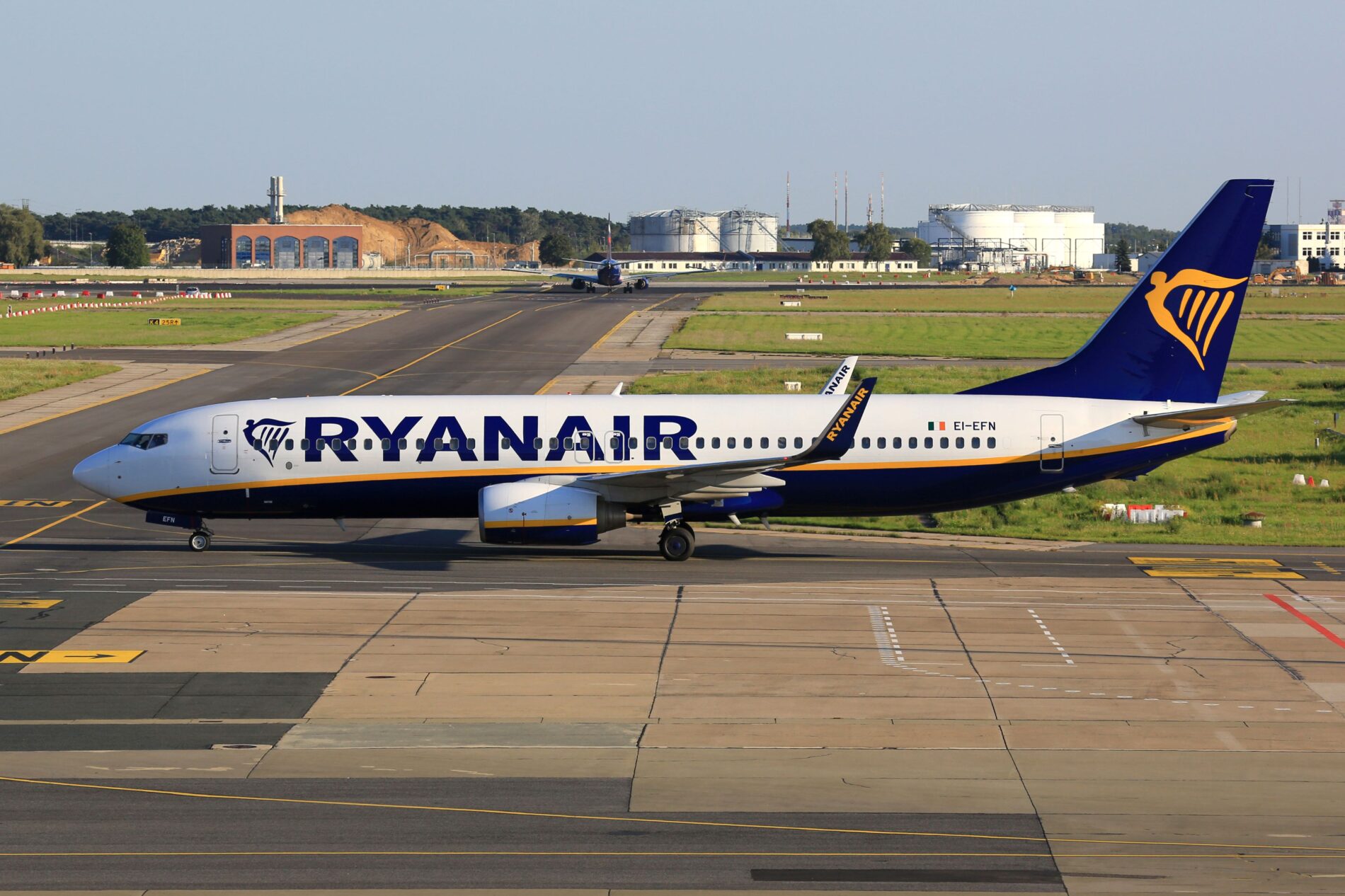
Image: Shutterstock
Ryanair’s withdrawal costs Berlin millions of passengers
The economic consequences now extend well beyond the cancellation of flight routes. BER Airport expects only 25.7 million passengers in 2026, down from 26.1 million the previous year. For 2027, airport management anticipates a further decline to between 25 and 25.2 million passengers—a figure well below the 27 million originally projected.
In response, airport CEO Aletta von Massenbach has announced a comprehensive review of expenditures. The aim is to reduce both personnel and operational costs, while certain planned investments are to be deferred. Ryanair’s withdrawal exacerbates an already existing economic weakness; back in 2019, approximately 35.7 million people used Berlin’s then-operational airports, Tegel and Schönefeld. Even seven years later, BER remains far from reaching that level of traffic.
Taxes and fees make German airports unattractive
Ryanair has singled out government levies and rising airport charges for criticism. According to the company, airport fees in Berlin have increased by more than 50 percent since 2019, with a further 10 percent rise projected by 2029. Additionally, security screening costs and air traffic control charges weigh on the economic viability of routes. Although the German federal government has already reduced the aviation tax, Ryanair is calling for its complete abolition.
Consequently, Wilson views Germany as a particularly unattractive market within Europe. While Ryanair is expanding its capacity in many other European countries, it is withdrawing aircraft from Germany. The seven planes currently based in Berlin are set to be redeployed to more cost-effective European locations, where lower fees—in the view of management—allow for more economically viable flight operations. As a result, Germany is losing not only flight connections but also stationed aircraft and employment opportunities.
Hamburg also faces a loss of flight connections
Ryanair’s withdrawal is not limited to Berlin. At Hamburg Airport, the airline is reducing its capacity by five percent for the winter season. In contrast, it is increasing its offerings in Memmingen by 12 percent and in Cologne by 10 percent—locations where Ryanair sees more favorable economic conditions. Furthermore, the airline has added Friedrichshafen and Saarbrücken to its winter flight schedule for the first time.
The cuts are particularly evident in terms of destinations. Berlin is losing direct Ryanair connections to cities including Bologna, Gran Canaria, Palermo, Marseille, and Thessaloniki, while the frequency of other routes is being reduced. This leads to a decrease in available seat capacity, while diminished competition may pave the way for higher ticket prices. Wilson explicitly warns of rising airfares and a decline in the capital’s international connectivity.
Berlin’s Airport Faces Declining Revenue and Diminished Economic Prospects
For BER, this creates an economic cycle fraught with significant risks. Fewer passengers mean lower revenue from flight operations as well as from retail and services. At the same time, the airport must continue to maintain its infrastructure; consequently, a drop in revenue cannot simply be offset by a corresponding reduction in operating costs. Furthermore, any additional increases in airport charges could deter even more airlines.
This conflict also highlights the limitations of German aviation policy. Airlines can move their aircraft around Europe with relative flexibility, whereas airports remain permanently tied to their specific locations. Ryanair had previously closed its bases in Frankfurt, Düsseldorf, and Stuttgart, while Dresden, Leipzig, and Dortmund also lost all of their Ryanair connections. As long as total costs in Germany remain higher than elsewhere, there is a persistent risk that further capacity will shift to more economically attractive markets.
Author: Blackout News
Sources: Manager Magazin /15.10.26) – Rbb24 (13.10.26) – Ntv (13.10.26) – Rynair (08.10.26)