
Employment in German industry fell to a ten-year low in 2025. Nationwide, only around 6.6 million people were employed in the manufacturing sector. Approximately 124,000 jobs disappeared within the span of a year; companies were less likely to replace departing employees and simultaneously limited new hiring. Weak production, high location costs, and uncertain sales prospects exacerbated this trend. The mechanical engineering and automotive industries, as well as energy-intensive sectors, have been particularly affected.
Ten-year low follows years of declining new hires
However, the reduction in employment is not solely due to major layoff programs. Since 2019, the number of new hires has been falling more sharply than the number of employment terminations. Consequently, many companies are reducing their workforces gradually; they are not filling vacancies that arise from retirements, resignations, or the end of contracts. As a result, employment levels often shrink without any publicly announced reduction programs.
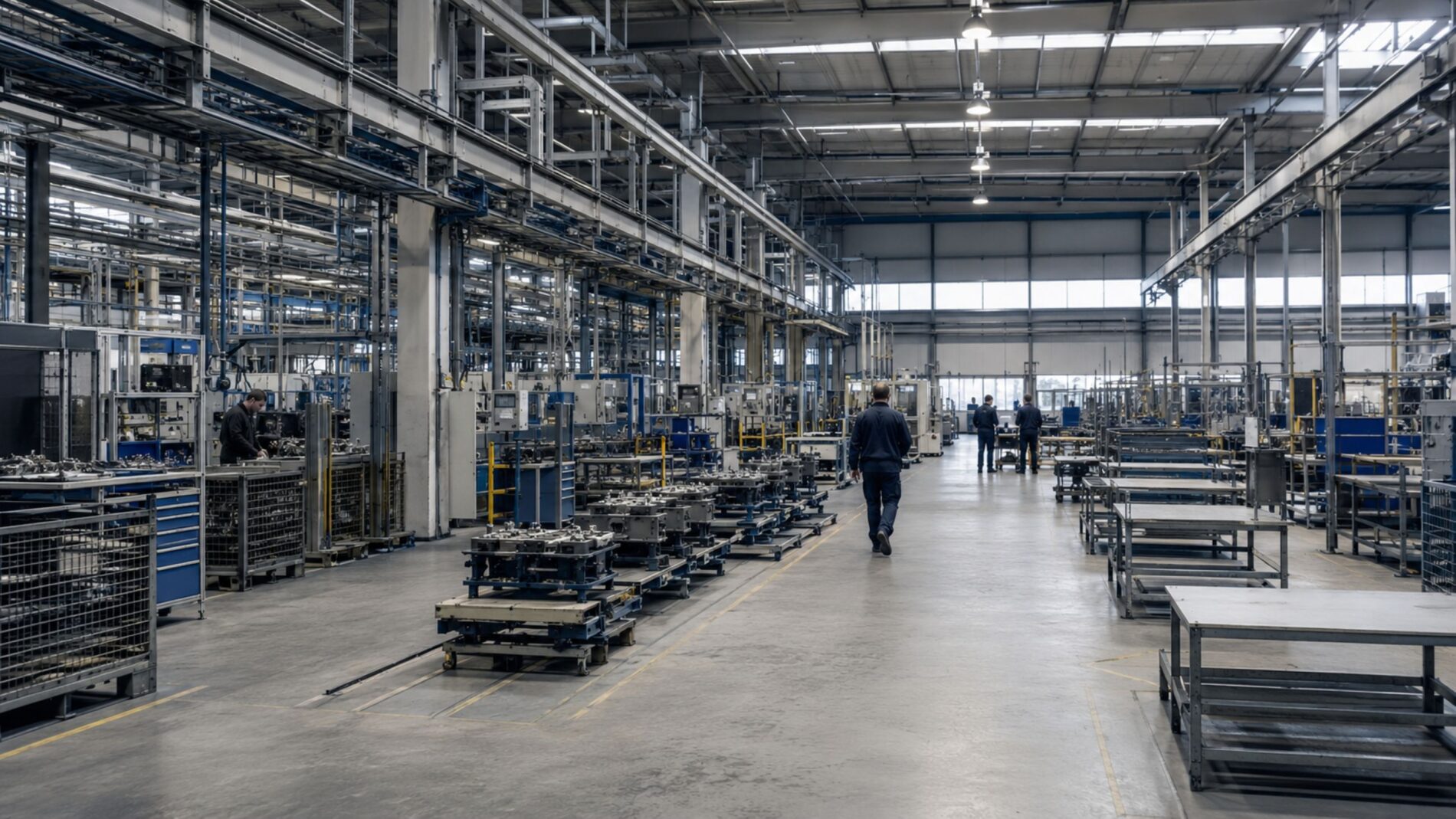
Image: AI-generated.
Small and medium-sized industrial enterprises are losing a particularly large number of jobs. However, these companies generally possess fewer financial reserves than large corporations. Consequently, high energy prices and weak order books place a heavier burden on their cost structures. The ten-year low thus reflects more than just the situation of individual major corporations; it encompasses broad segments of the industrial SME sector.
Industry’s declining importance for the German labor market
The share of industrial jobs has been falling for years. In 2014, the manufacturing sector still accounted for around 22 percent of all employed persons; today, that figure stands at only about 19 percent. Meanwhile, the service sector has gained in importance. Nevertheless, industry remains central to exports, investment, and regional value creation.
The financial advantage of an industrial job is also diminishing. In 2014, new entrants to the workforce in this sector earned around 20.4 percent more than their counterparts in other industries. Ten years later, however, that premium had shrunk to 10.4 percent. As a result, industry is losing a key advantage in the competition for skilled workers. Furthermore, reduced hiring makes it harder for young workers to enter the workforce.
Weak production accelerates job losses
Sluggish production is intensifying the decline in employment. German industrial output fell by 1.3 percent (calendar-adjusted) in 2025. Mechanical engineering output dropped by approximately 2.6 percent compared to the previous year, while automotive production declined by 1.7 percent. Companies are responding to this trend by cutting back on investment and adopting a cautious approach to workforce planning.
Energy-intensive industrial sectors saw production levels fall to 17.8 percent below those of 2021. High electricity and gas prices are therefore undermining the competitiveness of many German industrial sites. At the same time, weak demand and growing international competition are eroding profitability. The ten-year low in employment is therefore closely linked to the crisis in industrial production. Isolated months of improved orders are not enough to bring about a sustained turnaround.
Fewer Jobs Limit Entry and Job Mobility
For many employees, this decline does not mean immediate redundancy. However, gaining access to new industrial jobs is becoming significantly more difficult. Those entering the workforce are finding fewer vacancies, while unemployed individuals and skilled workers looking to change jobs are encountering companies that are reluctant to hire. As a result, the labor market is losing dynamism and adaptability.
Stabilization requires reliable investment conditions and competitive location costs. Companies also need viable sales prospects and predictable energy prices. If investments and new hires fail to materialize, industrial employment is likely to fall further. Job cuts could then spread to additional regions and supplier companies, leading to a further decline in tax revenues, purchasing power, and industrial expertise.
Author: Blackout News
Sources: Deutschlandfunk (18.06.26) – Reuters (18.06.26) – Global Banking & Finance Review (18.06.26) – CIO (18.06.26) – Statistisaches Bundesamt (09.06.26)