
In October 2026, the German hospitality sector continues to face a wave of closures and insolvencies. Between 2020 and 2025, approximately 69,000 food service businesses ceased operations, while Creditreform recorded more than 11,200 insolvencies. High costs for energy, labor, and food are coinciding with declining revenues and a more cautious clientele. In August 2026 alone, real turnover in the hospitality sector fell by 5.4 percent compared to the previous year. Consequently, many restaurant operators are attempting to attract more customers by offering affordable all-inclusive buffets. However, this rescue strategy carries new economic risks and is unlikely to prevent further business closures.
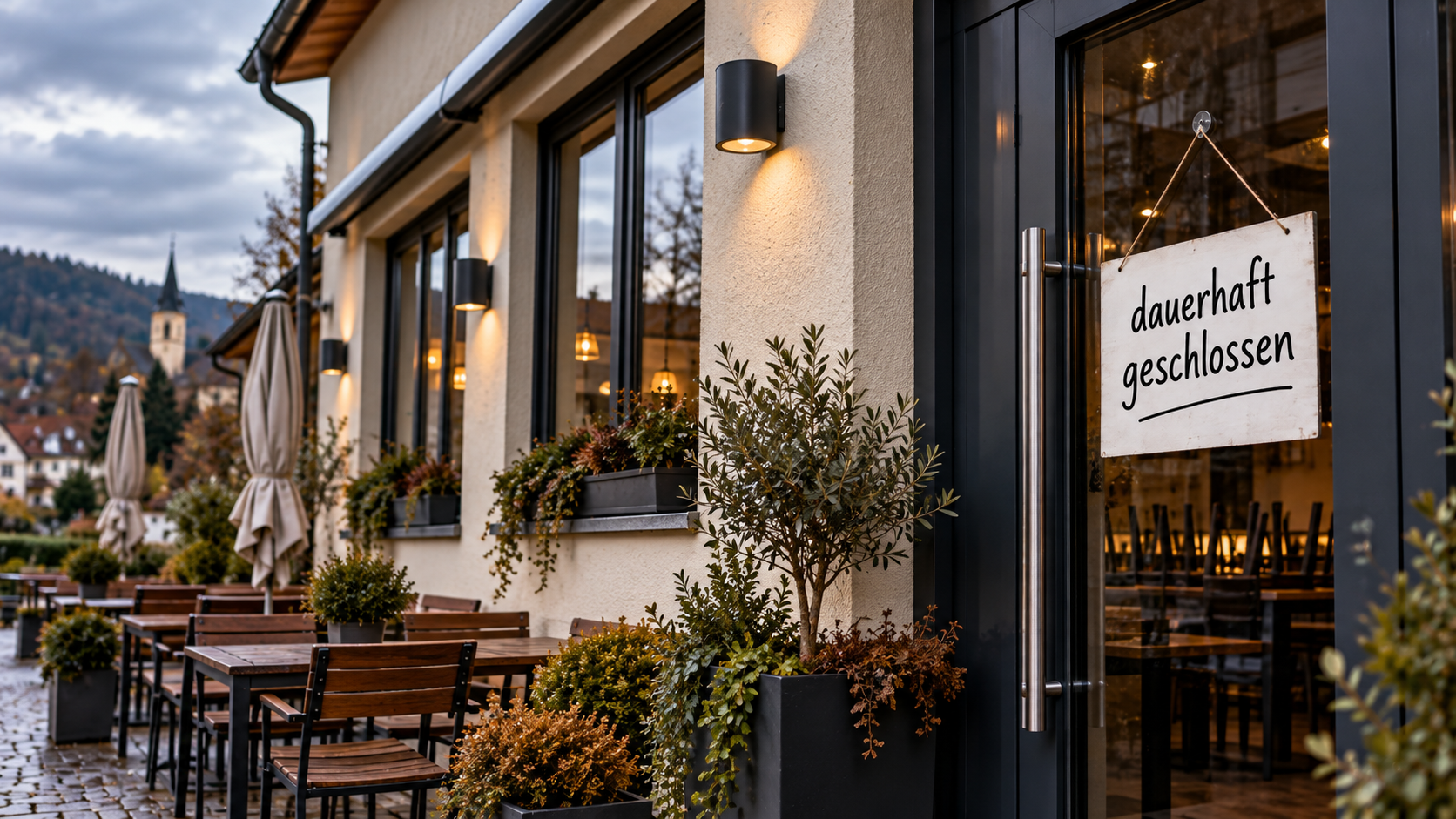
Image: AI-generated
Hospitality Sector Loses Tens of Thousands of Establishments
Figures from the credit agency Creditreform highlight the scale of the crisis. In 2024 and 2025 alone, approximately 24,500 eateries and restaurants disappeared from the market. Furthermore, around 2,900 hospitality businesses filed for insolvency in 2025—an increase of 29.6 percent compared to the previous year. Smaller, owner-operated establishments with limited financial reserves have been hit particularly hard. Many operators, however, choose to close down even before reaching the point of formal insolvency.
The economic distress is also evident at a regional level. In Bavaria, the number of insolvency proceedings in the hospitality sector rose by 47.7 percent in 2025, reaching 387 cases. This is in addition to numerous standard business closures, occurring in areas where new economic prospects are often lacking. Smaller municipalities, in particular, are losing restaurants, inns, and traditional gathering spots. These closures also result in the loss of jobs and contracts for regional suppliers.
Falling revenues are pushing an increasing number of restaurants into the red
Current revenue trends are further exacerbating the situation. According to the Federal Statistical Office, real turnover in the hospitality sector fell by 1.8 percent in August 2026 compared to July. Year-on-year, the decline reached 5.4 percent. Meanwhile, nominal revenue was 2.4 percent higher than the previous year’s level; however, these higher earnings fail to offset the loss in real value caused by price increases. Many establishments are seeing a decline in actual sales volume, while their fixed costs remain constant.
Compounding this is the shrinking purchasing power of consumers. Hospitality consultant Björn Grimm points to surveys indicating that approximately 42 percent of diners are cutting back on their restaurant spending. As a result, many customers are switching to more affordable options or avoiding restaurant visits altogether—a trend that is hitting mid-range restaurants particularly hard. At the same time, expectations regarding quality and service are rising, even as financial flexibility continues to shrink.
All-you-can-eat buffets as a desperate attempt at survival
In response, some operators are reverting to older business models. All-inclusive offers and buffets with unlimited consumption are being used in an attempt to win back lost customers. The fixed price offers consumers financial predictability, while restaurants hope for higher occupancy rates. Hospitality consultant Grimm, however, views this trend as a sign of economic desperation; businesses are using these promotional pricing strategies in an effort to at least partially stabilize their already declining revenues.
Yet, such offers can actually worsen existing economic challenges. Operators must purchase and prepare large quantities of food, even though actual demand remains uncertain. This increases the risk of food waste and puts further pressure on profit margins. Consequently, even a full restaurant does not necessarily generate sufficient profit. Those who set their prices too low may end up exacerbating the very losses they intended to avoid.
High costs and weak demand threaten more businesses
The hospitality sector is currently suffering from a combination of high costs and weak demand. According to Creditreform, around one-third of the companies surveyed are generating negative profit margins. Another 30 percent are achieving only slim margins of less than five percent. At the same time, many establishments have little to no equity to finance extended periods of loss. While the reduction in the value-added tax (VAT) on food—in effect since January 2026—provides some relief, it does not resolve the underlying economic difficulties.
Particularly concerning is the growing number of “silent” business closures. Rather than waiting for formal insolvency, many operators choose to close proactively to avoid further financial losses. The consequences affect employees, suppliers, and the local economy alike. While all-inclusive offers may provide short-term help to individual restaurants, they cannot replace a viable economic foundation. Consequently, without a sustained recovery in demand and significant cost reductions, further business closures are likely.
Author: Blackout News
Sources: Merkur (21.10.26) – DEHOGA-Bayern (20.10.26) – Destatis (20.10.26)