
The tile factory in Leisnig is halting production at the end of June 2026 for the time being, despite having been taken over by new owners. The move is driven by the insolvency of Panariagroup Deutschland; insolvency benefit payments cease in July, and ongoing operations would not be viable without a new cost structure. High electricity and gas prices are a particularly heavy burden—as ceramic production requires high temperatures—compounded by the construction crisis, which is further dampening sales. Consequently, there is no plan for the immediate continued employment of the 165-strong workforce, while a restart is not envisaged until 2027.
Tile factory to remain, but workforce loses job security
The site in Central Saxony is considered Germany’s largest tile plant. The facility has an annual capacity of around six million square meters. While the industrial site itself is being preserved, production is now being phased out in a controlled manner.
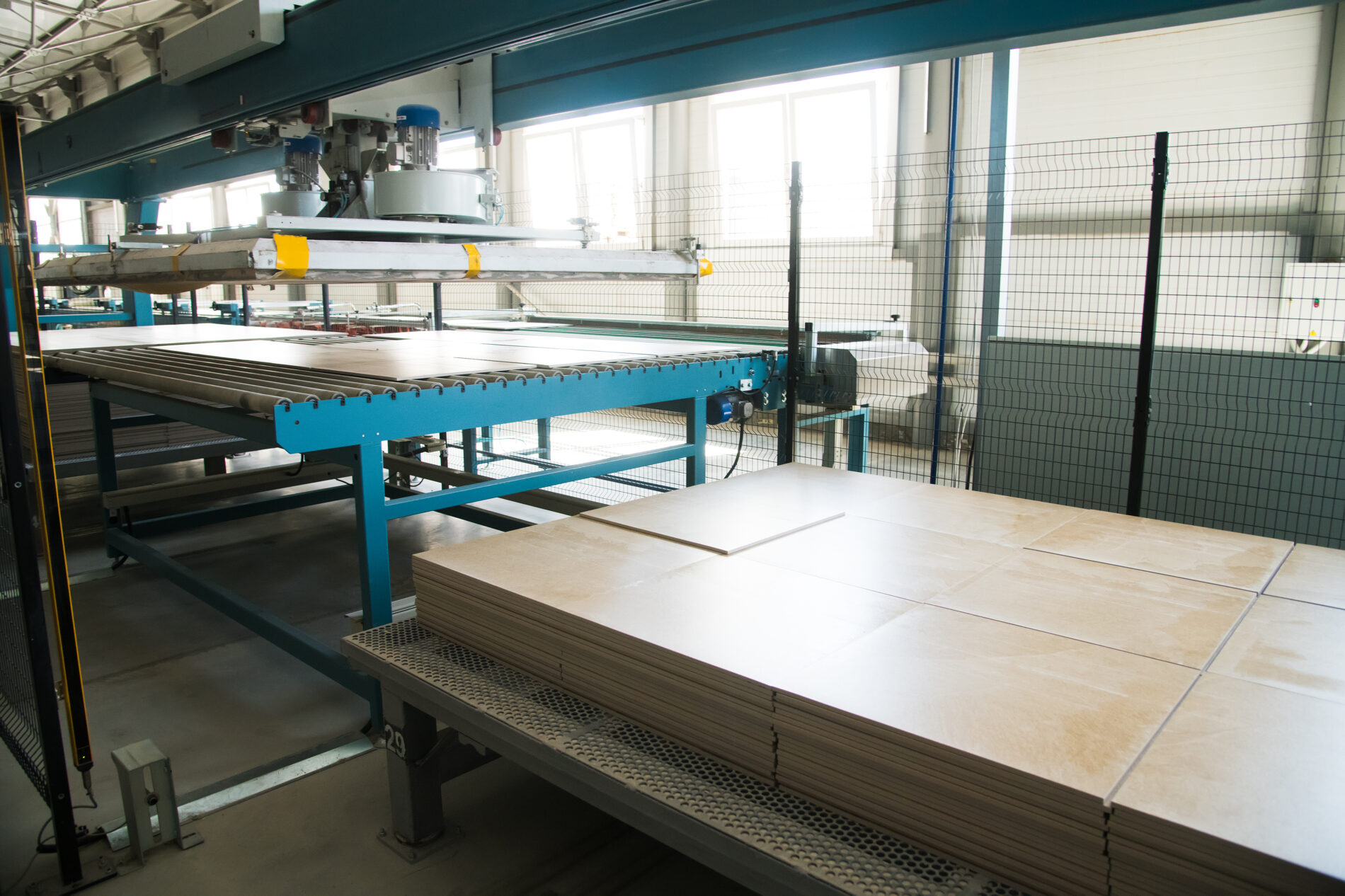
Representative image: Shutterstock
The provisional insolvency administrator is arranging for the facilities to be secured. Consequently, the kilns and technical equipment are not being shut down in a haphazard manner. Existing inventory can still be sold, though no new goods are currently being produced.
New owners do not plan an immediate restart
The Meta Wolf Group (Thuringia) and the TWO Family Office (Singapore) have purchased the site. However, they are not automatically taking over ongoing operations or retaining all existing jobs. This effectively decouples the preservation of the plant from the short-term rescue of the jobs.
This represents a severe blow for Leisnig. For years, the tile factory served as a hub for production, specialized expertise, and regional employment. Furthermore, suppliers and service providers rely on such industrial jobs, even if they do not appear directly in employment statistics.
Energy prices hit the ceramics industry particularly hard
Ceramic production requires predictable energy prices. Firing processes take place at high temperatures, meaning that gas and electricity costs have a greater impact than in many other sectors. When price hedging agreements expire, losses can quickly engulf the entire operation once again.
In addition, the construction market remains sluggish due to the current crisis in the sector. Neither new construction nor renovation work is providing quick relief, while material costs continue to rise. The Federal Statistical Office also reported higher prices for wall and floor tiles in May 2026.
2027 Relaunch Aims for Success Through Modern Technology
Meta Wolf plans to restructure production by 2027, with investments slated for solar systems, robotics, and artificial intelligence. Additionally, funding programs for energy efficiency and digitalization are intended to facilitate this transformation.
The relaunch is expected to create more than 100 jobs. Depending on the expansion of administration, logistics, IT, marketing, and sales, that number could rise further. However, it remains uncertain whether many current employees will be able to return.
Leisnig Site Highlights Vulnerability of Energy-Intensive Industry
The tile factory is not an isolated case; it exemplifies a pattern that particularly affects energy-intensive businesses in Germany. High fixed costs, a sluggish construction sector, and excessive gas and electricity prices leave little room for maneuver.
The sale averts the total loss of the site for the time being, yet it does not solve the immediate employment crisis. Consequently, the Leisnig location retains an industrial future, but the workforce pays the price for the transition with the loss of their jobs.
Author: Blackout News
Sources: t-Online (30.06.26) – Bild (29.06.26) – MDR (25.06.26) – ZRI Online (17.06.26) – Wirtschaft in Sachsen (24.06.26)