
In Germany, a prolonged blackout typically triggers a state of emergency under state law, as hazard prevention and disaster relief are primarily the responsibility of the individual states. A state of emergency can be declared very quickly, as soon as the situation becomes unmanageable with local resources. Upon declaration of a state of emergency, authorities and emergency response teams are granted expanded powers. They can compel individuals to provide assistance. They are authorized to requisition private property and equipment, including emergency generators, vehicles, machinery, fuel, and food supplies. Furthermore, they can order the use of land and buildings. They can cordon off or evacuate areas. They are authorized to control the distribution and use of scarce resources. Compensation is generally available for such interventions. Nevertheless, these orders take immediate effect because hazard prevention takes precedence. Private preparedness may also be affected.
What “confiscation” means in practice
Disaster relief law is all about time. Therefore, states resort to services, goods, and labor. Bavaria puts this particularly clearly: The authorities can demand services from “any person” and also requisition property.
This wording is broad and encompasses private provisions as well as businesses. At the same time, operational logic dictates the approach, because the situation requires stability. Therefore, the focus shifts to items that have an immediate impact.
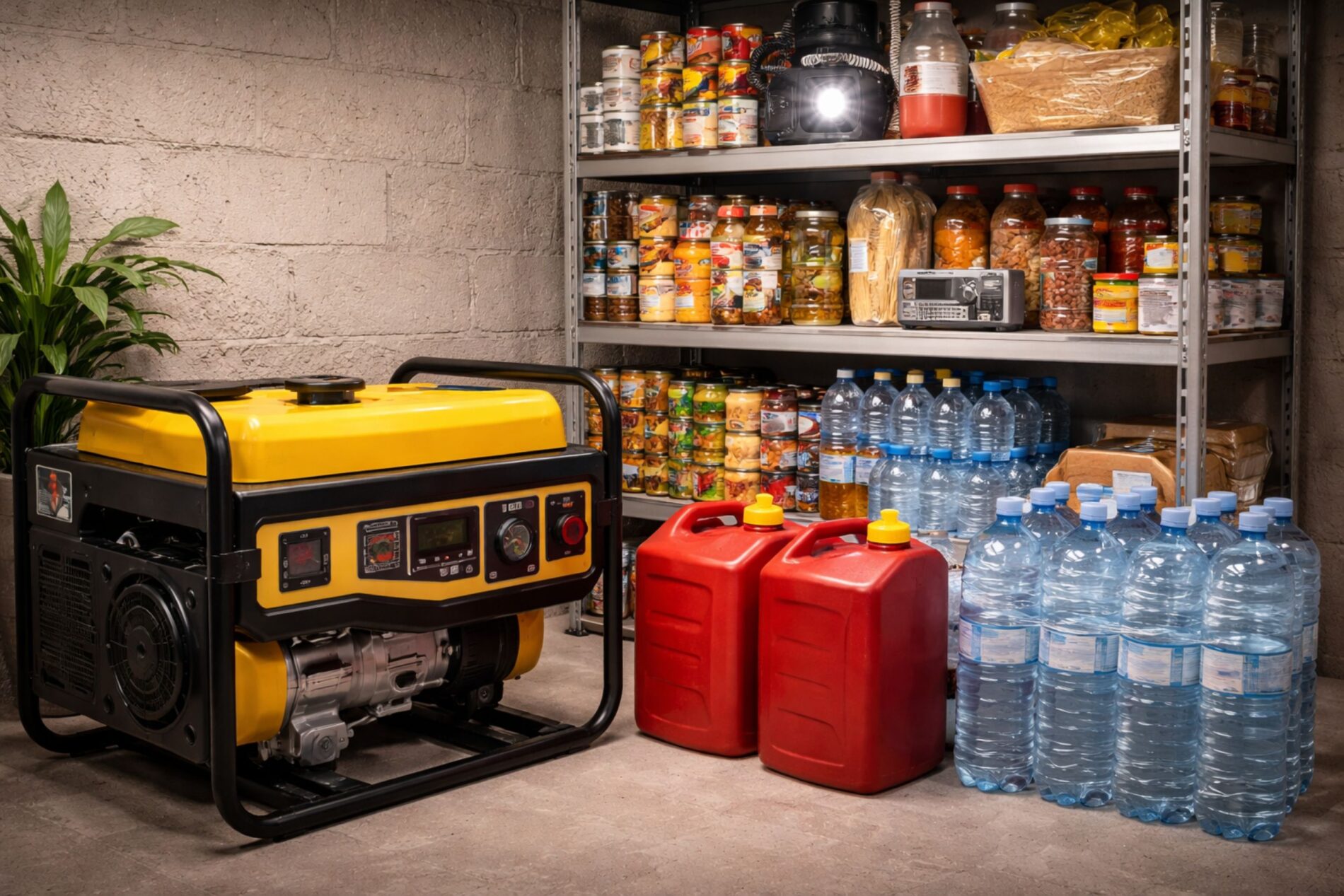
This includes emergency generators, pumps, cabling, and mobile lighting because they provide essential services. Vehicles and specialized equipment are also included because they ensure logistics. Fuel, classified as “property,” falls under the same access regulations and can quickly become critical in prolonged situations. Furthermore, the state can not only request but also control the use of the confiscated “property.”
Imminent Danger – Access Without Waiting Time
The situation becomes particularly delicate when laws refer to “imminent danger.” In such cases, every minute counts, and authorities may delay formalities. Bavaria explicitly permits deployed forces to seize property immediately.
This is aimed at situations where radio communications fail or critical infrastructure collapses. And it fits perfectly with blackout scenarios.
Hamburg uses a similar approach. There, authorities are permitted to seize property through immediate execution in cases of imminent danger.
This effectively creates immediate access, even if it is documented later. Nevertheless, the measure remains contingent on necessity. However, this threshold does not prevent the initial seizure.
Access doesn’t end with physical objects; it also includes use
Many people think of generators, but the laws also target land and buildings. Lower Saxony clearly regulates the obligation to tolerate access: Owners must allow emergency personnel to enter and use their properties and facilities as necessary.
This applies to warehouses, access roads, and open spaces, as well as business premises. It can also enable distribution points or emergency shelters.
This use of property often has a greater impact than simply taking possession. Authorities may block parking spaces or occupy warehouses to organize supplies. Furthermore, the command center can close off or evacuate areas if the situation requires it. This directly affects owners, even without long-term planning.
North Rhine-Westphalia (NRW) presents the classic example – vehicles and equipment on demand
North Rhine-Westphalia defines access to resources particularly precisely. The BHKG (Emergency Response and Control Act) specifies “urgently needed resources,” especially vehicles or equipment, which must be made available “by anyone.”
This means that access to transport, trailers, construction machinery, or forklifts is not just theoretically enshrined in law. The incident commander can issue an order, and the recipient must comply.
The duty to provide assistance is also in the same context. The state can call upon people if the situation demands it. As soon as supplies become scarce, the pressure on private logistics increases. Therefore, access affects not only “preppers” but, above all, operators of useful technology.
Compensation exists, but it doesn’t stop access
Almost all states link interventions to compensation rules. Lower Saxony obligates the requesting authority to provide monetary compensation if financial losses arise from the request or acquiescence.
This is important because it acknowledges damages. At the same time, it doesn’t prevent the measure, because the situation takes precedence. Thus, compensation remains more of a reactive measure.
Bavaria regulates costs and compensation in its own section, and Hamburg has liability and compensation rules for damages in disaster relief.
Those affected can also pursue legal remedies, provided that courts and administrative bodies remain accessible. Nevertheless, the crisis is shifting the focus: stabilization first, disputes later. Therefore, the legal situation should be assessed objectively.
Food and Agriculture – Access is primarily governed by federal law and large-scale structures
When it comes to food, the state intervenes less at the private level and more at the state level. Federal law exists for genuine supply crises, such as the Food Security and Precautionary Act (ESVG).
This system operates with stockpiles, distribution decisions, and state control. And it is effectively geared towards large-scale structures because only there do quantities have a significant impact.
This means that farmers, warehouse operators, and wholesalers have more access than individual households. The state can prioritize distribution because otherwise unrest is likely. Furthermore, it can manage supply chains if transport and trade fail. Therefore, preparedness remains sensible, but in a crisis, it competes with public needs.
What this means for your private emergency preparedness
The government is most likely to access items deemed essential to the system. A small private emergency supply stored in the basement is rarely of interest because it has little impact. A high-performance generator, a diesel tank, or a van, on the other hand, provides leverage. Therefore, the risk increases with the usefulness of the equipment.
Nevertheless, private emergency preparedness remains rational because it bridges the initial crisis. It reduces dependency and lowers the potential for conflict. However, owners of expensive equipment should be aware of the legal situation and prepare the necessary documentation. And they should accept that disaster relief laws create access to resources because the government must remain capable of acting. (KOB)